

 English
 中文简体
中文简体Troubleshooting Bags Won't Open on FFS Lines: Static, Dust & Seal Issues
Content
On a Form-Fill-Seal line running powder products, few problems drain efficiency faster than bags that refuse to open. The machine cycles, the film advances, the filler activates—but the bag mouth stays shut, product piles up, and the line jams. What makes this failure mode particularly frustrating is that it has three completely different root causes, each requiring a different fix. Misdiagnose the source and you can adjust machine parameters for an hour without improving anything. This guide gives you a structured way to identify which root cause you are dealing with—static charge, dust contamination, or seal parameter faults—and then resolve it efficiently.
Why Bags Fail to Open: The Three Root Causes
When a bag on an FFS line will not open, the symptom looks the same regardless of cause: the two film layers remain stuck together at the bag mouth, blocking product entry. But the reason they are stuck together differs substantially:
- Static charge creates an electrostatic attraction between the inner film surfaces, physically clamping them together. No amount of mechanical opening force resolves this unless the charge is neutralized.
- Dust contamination at or near the seal zone causes the sealing jaws to bond the bag mouth unintentionally, or it migrates between the film layers and acts as an adhesive under heat and pressure.
- Seal parameter faults result in a cross-seal that is either too strong, placed too close to the bag mouth, or structurally deformed—preventing normal opening even when static and dust are absent.
The fastest diagnostic step is to pull a bag from the line and attempt to open it manually while wearing a grounded wrist strap. If the bag opens easily by hand but not on the machine, static is almost certainly the primary cause. If the bag resists opening even by hand and the film layers feel partially bonded, the cause is a seal or contamination issue. Keep that distinction in mind as you work through each root cause below.
Root Cause 1 — Static Charge: How It Seals Bags Shut
Static electricity builds up on polymer film through triboelectric charging: every time the film contacts a roller, forming collar, or drive belt and then separates, charge is deposited on the film surface. On a VFFS or HFFS line, the film passes over dozens of contact points before it reaches the filling station, accumulating charge with each one. By the time the bag mouth reaches the opening stage, the inner surfaces can carry charges of several kilovolts, creating an attractive force that effectively seals the bag shut without any heat involved.
Several conditions amplify the problem:
- Low ambient humidity (below 40% RH), common in air-conditioned facilities or winter operations, drastically reduces the film's natural charge dissipation rate.
- Worn or dirty rollers increase friction at each contact point, generating more charge per revolution.
- High machine speeds reduce the time available for any passive charge bleed-off between contact points.
- Film reformulations by a supplier can change surface resistivity without notification, suddenly making a previously stable run prone to static.
Beyond preventing bag opening, static charge compounds other problems on powder lines: it attracts airborne fine particles to the film surface and to the seal area, and in environments handling flammable dusts, uncontrolled electrostatic discharge poses an ATEX safety risk.
- Install ionizing bars at two critical positions: at the film unwind point (before the forming section) and immediately before the bag-opening station. Active ionizing bars emit ions that neutralize surface charge in milliseconds as the film passes through.
- Audit roller condition. Rough, buildup-coated, or worn rollers are disproportionate charge generators. Clean all idler rollers with isopropyl alcohol and inspect bearing condition monthly.
- Control ambient humidity. Raising facility RH to 45–55% meaningfully improves passive charge dissipation. Even a localized humidifier near the forming section can reduce static events.
- Specify film with built-in anti-static additives. Films with internal static-dissipative compounds maintain lower surface resistivity throughout their service life, unlike topical coatings that can wear off during unwinding. This is the most reliable long-term solution because it removes the dependency on ionizing equipment operating correctly at all times.
Root Cause 2 — Dust Contamination at the Seal Zone
Powder products create a hostile environment for FFS sealing. During filling, fine particles become airborne and settle on every available surface—including the film at the bag mouth. For products with a particle size distribution below 50 µm (protein powders, pharmaceutical excipients, fine food starches), the problem is particularly acute: these particles are light enough to remain suspended long after the fill cycle ends, and small enough to penetrate micro-gaps in the seal jaw geometry.
Dust contamination affects bag opening through two distinct mechanisms. First, fine powder that settles between the film layers near the bag mouth can be compressed and partially fused under the heat and pressure of the cross-seal jaw, creating unintended bonding that makes the bag resist opening. Second, powder that accumulates on the seal jaw faces acts as a thermal insulator, producing inconsistent seal strength across the bag width—some areas over-sealed, others under-sealed, resulting in bags that either cannot open or open irregularly and tear. For bulk applications, this same problem appears at FIBC liner fill spouts; a detailed treatment of moisture and contamination management at that scale is covered in our moisture barrier FIBC liner guide.
Solutions for dust contamination failures
- Adjust fill timing. The most impactful operational change is ensuring product flow stops completely before the cross-seal jaws close. Add a settling delay of 150–300 ms after the auger or dosing unit stops before triggering the seal cycle. This allows airborne particles to settle below the seal zone before jaws engage.
- Install localized dust extraction at the fill point. A low-velocity suction nozzle positioned above the bag mouth captures airborne particles before they migrate to the seal area without interfering with fill weight accuracy.
- Inspect and clean seal jaw faces daily. Use a brass scraper (never steel) and a lint-free cloth with isopropyl alcohol. Inspect for baked-on residue that changes jaw surface texture and thermal transfer characteristics.
- Consider film with wider seal initiation windows. Films engineered with broader heat-seal temperature ranges are more tolerant of the slight jaw temperature variations that occur when dust contamination is present. A narrow seal window amplifies every source of inconsistency.
Root Cause 3 — Seal Parameter Faults
Even when static and dust are under control, incorrect seal parameters produce bags that physically cannot open normally. The three seal variables—temperature, dwell time, and jaw pressure—must be balanced precisely. On powder lines, operators frequently push dwell time upward to compensate for dust interference at the seal zone, which can result in over-sealed bags where the bond strength exceeds the peel strength the film was designed to deliver.
| Parameter Fault | Observable Symptom | Corrective Action |
|---|---|---|
| Temperature too high | Film burns through, or seal is glassy/rigid and resists peeling | Reduce jaw temperature in 5°C increments; verify with external thermocouple |
| Dwell time too long | Seal is over-bonded; bag tears rather than opening cleanly | Reduce dwell time; verify minimum seal strength with peel test at target speed |
| Jaw pressure uneven | Seal strong on one side, weak on the other; bag opens asymmetrically or tears | Verify jaw alignment with carbon paper impression; adjust pneumatic pressure evenly |
| Seal position too close to bag mouth | Seal encroaches on opening area; consumer/machine cannot access bag interior | Adjust registration or cutting position to leave adequate unsealed margin at mouth |
| Temperature controller drift | Intermittent seal quality; some bags open fine, others do not | Calibrate temperature controllers monthly using external thermocouple; replace drifting elements |
One often-overlooked seal fault specific to powder lines is jaw contamination from product buildup that has baked onto the jaw face over multiple shifts. This residue acts as a localized insulator, creating hot and cold spots across the seal width. The result is a seal that looks complete visually but has variable bond strength—areas of over-bonding adjacent to under-bonded channels. Always verify jaw cleanliness before attributing opening problems to film or machine parameter settings.
Choosing Film That Reduces FFS Line Problems at the Source
Machine-side interventions fix symptoms. Film selection eliminates root causes. The two properties that matter most for powder FFS applications are static dissipation performance and seal window width—and both are film-material decisions, not machine-setting decisions.
Films with compounded anti-static additives (rather than topical surface treatments) maintain stable surface resistivity across their entire roll length and throughout the machine run. Surface treatments deplete as the film contacts rollers and the forming collar; internal additives do not. When evaluating film for a powder FFS line, request surface resistivity data (measured in ohms/square) at your facility's typical ambient humidity. A film with surface resistivity below 10¹² Ω/sq at 40% RH will dissipate charge fast enough to prevent the clamping effect at the bag-opening station in most operating conditions.
Seal window width—the temperature range between minimum acceptable seal strength and the point at which the film burns or over-bonds—determines how much tolerance your process has for jaw temperature variation, dust interference, and machine speed changes. A narrow seal window means even a partially contaminated jaw face will cause failures. A film engineered with a wider seal window absorbs operational variability without producing defective bags. For a comprehensive overview of how to evaluate film structures against FFS line requirements, see our food packaging films selection guide.
For powder applications requiring both anti-static performance and high barrier properties, multi-layer co-extruded films that integrate static-dissipative layers with PA/EVOH barrier structures offer the most complete solution. These structures address the bag-opening problem while maintaining the oxygen and moisture protection the product requires. The INTERTRAM high-performance film range is engineered specifically for demanding powder applications, combining anti-static functionality with verified barrier performance and consistent seal characteristics across production runs.
The underlying principle is straightforward: every hour spent troubleshooting a recurring bag-opening problem on the line is a symptom of a film specification that was not matched to the application requirements. Getting the film right upstream eliminates the problem rather than managing it.
-
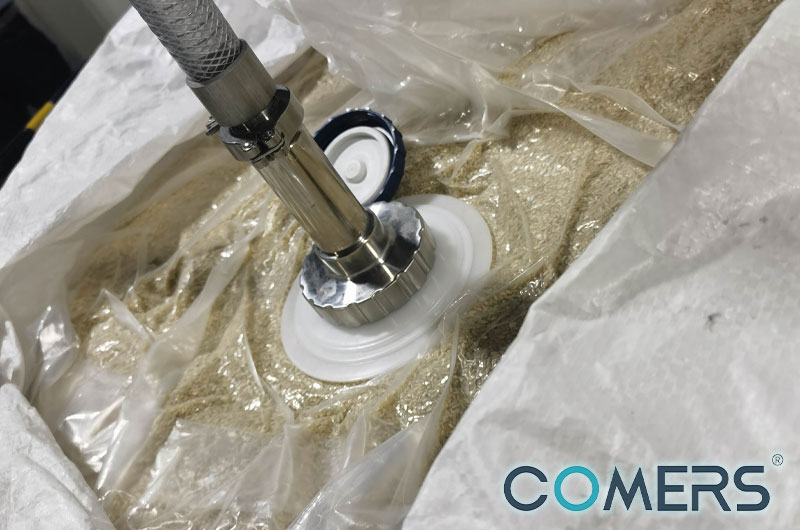
Intertram®FIBC Liners
+ Permanent anti-static / temporary anti-static
+ High barrier performance
+ Single material
+ Prevent from moisture, oxygen(low WVTR<3.0,OTR<1.0)
+ Various film types and thicknesses (Length:1M1-2M2 Thinkness:30-160um)
+ For milk powder/ coffee powder
+ Effective barrier and product protection
+ Strict quality control and safety standards
+ Highly customizable solutions
+ Durable and puncture-resistant
-

Intertram®FFS Liners
+ high barrier performance
+ prevent from moisture, oxygen(low WVTR<3.0,OTR<1.0)
+ various film types and thicknesses (Length:1M1-2M2 Thinkness:30-160um)
+ can replace Al material
+ High standard in food safety
+ Anti-static film (ATEX prevention)
+ Strict control over contaminants (BPA, Sakazaki-bacillus, etc.)
+ Tailored to customer needs
+ Enhanced product shelf life (approx. 6 months)
-

Washna ® Easy-peel films
+ prevent from moisture, oxygen(low WVTR<3.0,OTR<1.0)
+ various film types and thicknesses (Thickness:45 - 90um)
+ Clean & Safe Delamination
+ smooth sealing layer without wire drawing
+ Optimal Peel Performance
+ Good control level of black dot crystal point, in line with GB/T28117
+ Food contact safety
+ High durability
+ Superior barrier properties
+ Child-friendly opening
+ Clean, residue-free peel -
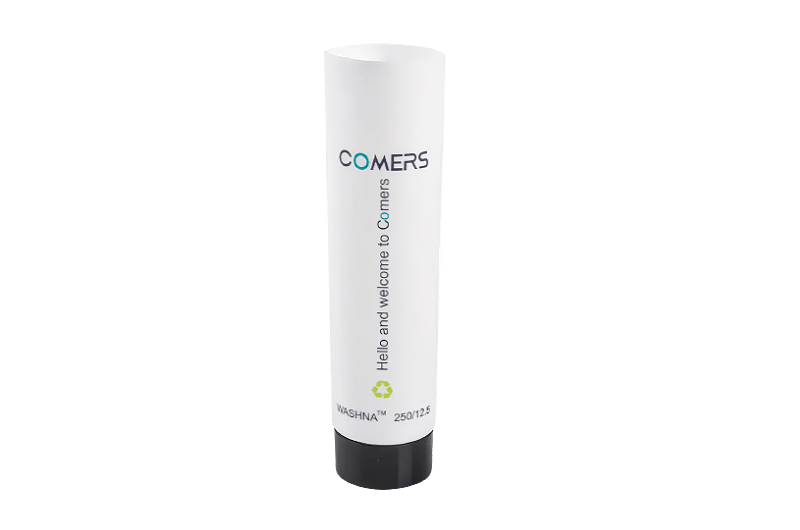
Washna® toothpaste films
+ Suitable for products in paste form
+ High stiffness and good mechanical properties
+ APR approval, Blow-molded in a single blow-molding
+ EVOH≤5%, in line with CEFLEX
+ white/transparent/ultra-white variants (customizable whiteness)
+ Precise thickness control (175−350μm±3%)
+ Excellent puncture resistance
+ Speckle-free surfaces (GB/T 28117 compliant)
+ Reduces environmental impact -

Washna® Laminate films
+ Operates with high-volume film
+ ultimate cost control
+ Good level of crystal point and black point control
+ Customizable with thickness and EVOH ratio
+ Easy-open End (EOE) functionality
+ Preserves freshness and extends shelf life
+ Odor-neutral composition
-
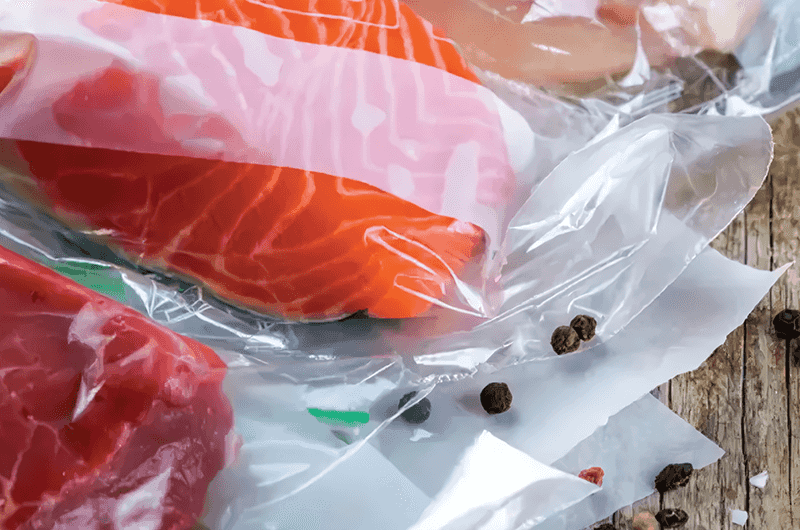
Agometa ® Frozen Vacuum Packaging Bags/Films
+ Excellent transparency
+ Good barrier against water vapor and oxygen
+ Heat sealing performance
+ Adds ultra-high barrier properties
+ high-end food market
+ stable performance, flexible and versatile
+ Good puncture resistance
Jiangsu Comers Neo Materials Co., Ltd.
No.161 Cailing Road, Linhu Town, Wuzhong District, Suzhou City, Jiangsu Province, China.
+86-0512-66558319
E-mail: [email protected]
