

 English
 中文简体
中文简体Moisture Barrier FIBC Liner Guide: Specs, Materials, QC
Content
- 1 What a Moisture Barrier FIBC Liner Does (and When You Need One)
- 2 How Moisture Gets In: Pathways and a Simple Risk Calculation
- 3 Moisture Barrier Liner Materials: What to Specify (Not Just “Plastic Liner”)
- 4 Fit and Construction: The Most Common Reason “Barrier Liners Fail”
- 5 Operational Best Practices That Preserve Moisture Barrier Performance
- 6 Quality Control: How to Verify a Moisture Barrier FIBC Liner Will Perform
- 7 Troubleshooting: Symptoms, Likely Causes, and Corrective Actions
What a Moisture Barrier FIBC Liner Does (and When You Need One)
A moisture barrier FIBC liner is an inner film liner used inside a flexible intermediate bulk container (FIBC) to reduce water vapor ingress and protect moisture-sensitive products. It is commonly used for hygroscopic powders, food ingredients, specialty chemicals, and minerals that cake, clump, or degrade when exposed to humidity.
You typically need a moisture barrier liner when any of these are true: storage times are long, humidity is high, product specifications include a tight moisture limit, or the product must flow freely at discharge. In practice, the liner becomes the primary moisture-control layer because standard woven polypropylene fabric is breathable.
Common product triggers
- Powders that cake or bridge (e.g., salts, sugar, starches, fertilizer blends)
- Ingredients with strict water activity or moisture specs (food and nutraceuticals)
- Products sensitive to oxidation where moisture accelerates degradation
- Export or coastal storage where ambient RH is routinely high
How Moisture Gets In: Pathways and a Simple Risk Calculation
Moisture enters a bulk package through two main mechanisms: diffusion through the liner film (water vapor transmission) and leakage through openings (poor ties, punctures, valve gaps, or heat-seal defects). A “high-barrier” film only helps if the package is also well sealed.
Practical moisture-ingress estimate
A quick screening calculation can help you decide whether you need a basic PE liner, a higher-barrier construction, or additional controls like desiccant. Use a representative water vapor transmission rate (WVTR) from your liner supplier’s test method and conditions.
Worked example (illustrative): Assume a liner WVTR of 1.0 g/m²/day (under the supplier’s stated test conditions), exposed liner surface area of 6 m², and storage time of 45 days. Estimated water vapor gain ≈ 1.0 × 6 × 45 = 270 g of water vapor over the storage period. If that amount would push your product above its moisture limit, you should specify a better barrier, reduce exposure time, improve sealing, or add moisture management steps.
Moisture control is a system, not just a film choice
- Barrier performance (film construction + thickness + seams)
- Closure integrity (ties, heat seals, spouts, valve seating)
- Handling damage prevention (puncture, abrasion, forklift impacts)
- Environment (temperature cycling and high RH accelerate ingress)
Moisture Barrier Liner Materials: What to Specify (Not Just “Plastic Liner”)
“FIBC liner” can mean anything from a simple polyethylene bag to engineered barrier laminations. The correct choice depends on moisture sensitivity, storage duration, temperature exposure, and whether you need additional properties (food contact compliance, antistatic behavior, or cleanroom packaging).
| Liner type | Moisture barrier level | Strengths | Watch-outs |
|---|---|---|---|
| LDPE/LLDPE liner | Basic to moderate | Cost-effective, easy to handle, good sealability | Higher WVTR than barrier laminations; must avoid pinholes |
| Co-extruded barrier film (multi-layer) | Moderate to high | Improved moisture control without foil; better toughness than some laminates | Specify test method/conditions; barrier varies by resin stack |
| Metallized film laminate | High (if intact) | Low WVTR potential; lighter than foil | Barrier can drop if scratched/creased; handle carefully |
| Aluminum-foil laminate | Very high (near-hermetic with good seals) | Best for long storage and highly sensitive products | Higher cost; risk of pinholing from rough handling; sealing discipline required |
Key spec line items to request from suppliers
- WVTR with stated test conditions (temperature, RH, method) to make comparisons meaningful
- Film gauge (thickness) and allowable tolerance
- Seam type and seal strength expectations (especially for foil/metallized structures)
- Food-contact declarations or compliance statements if applicable
Fit and Construction: The Most Common Reason “Barrier Liners Fail”
A moisture barrier FIBC liner can have excellent material performance and still fail in use due to poor fit. Overly tight liners can split at corners or seams during filling. Overly loose liners create folds that concentrate stress, snag on internal baffles, or interfere with spout closure.
Dimensions and features to lock down
- Liner circumference matched to the FIBC internal perimeter (including baffles if used)
- Liner length that allows proper top closure without stretching
- Filling and discharge design: open top, top spout, form-fit, or valve-style liner
- Corner protection options if sharp product grains or internal abrasion are expected
Closure options and moisture leakage risk
Closures are often the weakest point for moisture ingress. For high-sensitivity applications, specify closures that minimize “chimney paths” (continuous air gaps) and are repeatable on the line.
- Choose a closure method (tie, zip, heat seal) that your operators can execute consistently.
- Standardize the number of twists/folds before tying or sealing to reduce variability.
- Define a visual acceptance standard for “fully closed” spouts (photo-based work instruction).
- If heat sealing, verify seal width and temperature dwell settings as controlled parameters.
Operational Best Practices That Preserve Moisture Barrier Performance
Barrier liners are sensitive to small process mistakes. Most moisture issues trace back to punctures, poor sealing, or filling practices that overstress the liner. The goal is to keep the liner intact and the closure airtight enough for the target shelf life.
Handling and filling controls
- Inspect liners before use for pinholes, crease damage, and seam defects; reject early rather than rework later.
- Control liner inflation during filling to prevent the liner from dragging and tearing on product flow or equipment edges.
- Avoid sharp internal contact points: burrs on spout rings, worn clamps, or rough surfaces inside the FIBC.
- Use slip sheets and clean forks; forklift punctures are a leading cause of barrier loss after filling.
Moisture management tactics beyond the liner
If your risk estimate is tight, combine the liner with secondary controls. The best ROI often comes from reducing exposure time and improving closure consistency.
- Fill and close in a controlled-humidity area when feasible.
- Minimize headspace air by optimizing fill level (within safe handling limits).
- Use desiccant only with a clear mass-balance approach; undersized desiccant adds cost without impact.
- Overwrap or pallet shroud for long dwell times in humid lanes.
Quality Control: How to Verify a Moisture Barrier FIBC Liner Will Perform
For moisture-sensitive products, treat the liner as a critical component with defined acceptance criteria. Verification should cover both material properties (barrier and thickness) and package integrity (seals and leak paths).
Recommended incoming and in-process checks
- COA review including film structure, gauge, and reported WVTR test conditions.
- Gauge spot checks at multiple points (especially for high-barrier laminations).
- Seal-strength validation for heat-sealed constructions (define minimum acceptable performance).
- Package integrity tests (simple pressure decay or dye/soap-bubble leak checks where appropriate).
A practical acceptance approach
Define acceptance in terms of what matters to the product: maximum allowable moisture pickup over storage time, and zero tolerance for visible liner damage. If you have moisture-related rejects, add a feedback loop: correlate failures to liner lot, closure method, handling lane, and storage location to isolate root causes.
Troubleshooting: Symptoms, Likely Causes, and Corrective Actions
When moisture issues occur, look for evidence that distinguishes diffusion-driven ingress from leakage-driven ingress. Diffusion tends to be gradual and predictable; leakage is often inconsistent and cluster-based (specific shifts, operators, lanes, or handling events).
| Symptom | Most likely cause | Corrective action |
|---|---|---|
| Caking/clumping after storage | Barrier too low for dwell time and RH | Specify higher barrier film or reduce exposure time; validate with WVTR-based estimate |
| Random “wet bags” in a lot | Leaks from closure variability or punctures | Standardize closure work instruction; add leak checks; improve fork protection |
| Moisture spike near top only | Top spout not fully sealed; chimney path | Upgrade closure method; define twist/fold standard; consider heat sealing for high sensitivity |
| Seal failures on barrier laminates | Incorrect sealing settings or contamination | Control temperature/dwell/pressure; keep seal area clean; verify seal strength routinely |
A simple, effective conclusion
If you want reliable results, specify a moisture barrier FIBC liner as a complete system: defined barrier performance (with test conditions), correct fit, repeatable closures, and handling controls that prevent punctures. The most impactful improvements are often operational: consistent closure quality and damage-free handling.
-
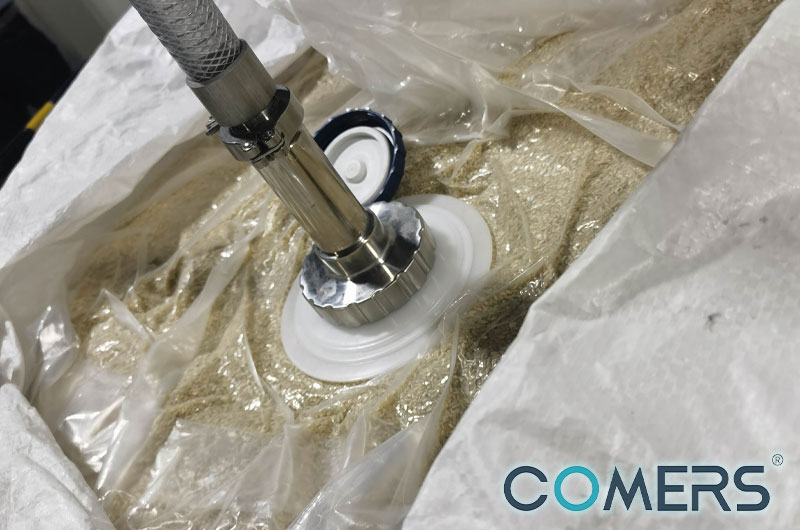
Intertram®FIBC Liners
+ Permanent anti-static / temporary anti-static
+ High barrier performance
+ Single material
+ Prevent from moisture, oxygen(low WVTR<3.0,OTR<1.0)
+ Various film types and thicknesses (Length:1M1-2M2 Thinkness:30-160um)
+ For milk powder/ coffee powder
+ Effective barrier and product protection
+ Strict quality control and safety standards
+ Highly customizable solutions
+ Durable and puncture-resistant
-
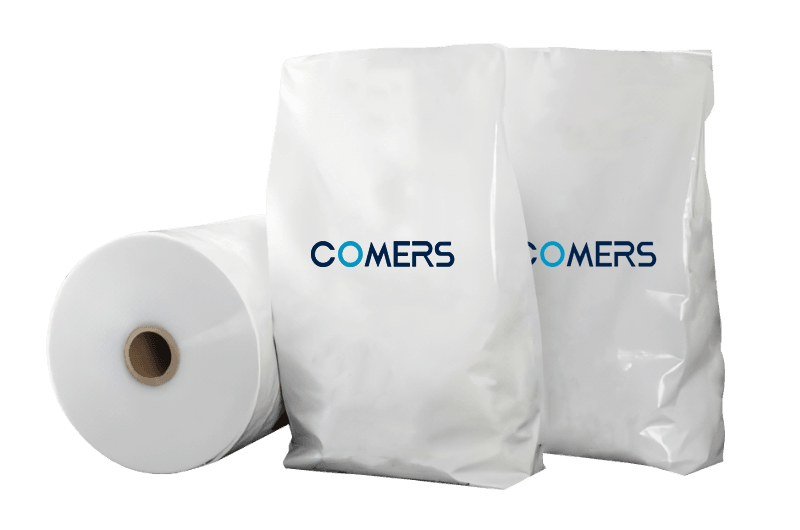
Intertram®FFS Liners
+ high barrier performance
+ prevent from moisture, oxygen(low WVTR<3.0,OTR<1.0)
+ various film types and thicknesses (Length:1M1-2M2 Thinkness:30-160um)
+ can replace Al material
+ High standard in food safety
+ Anti-static film (ATEX prevention)
+ Strict control over contaminants (BPA, Sakazaki-bacillus, etc.)
+ Tailored to customer needs
+ Enhanced product shelf life (approx. 6 months)
-
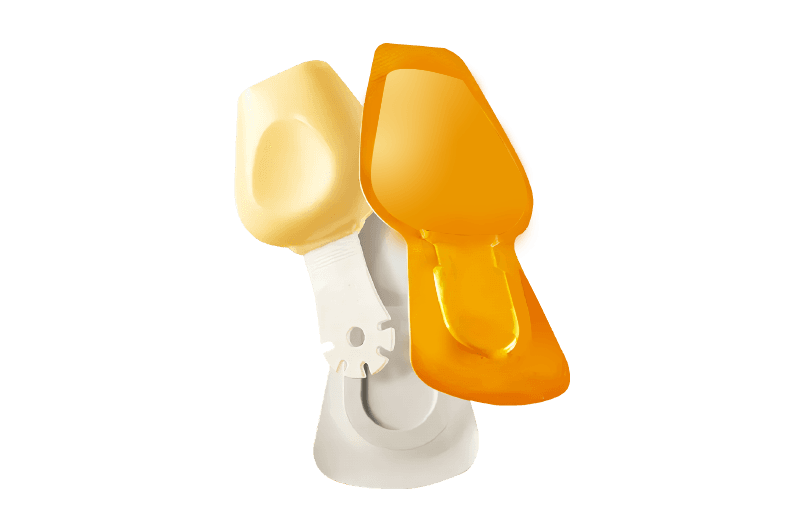
Washna ® Easy-peel films
+ prevent from moisture, oxygen(low WVTR<3.0,OTR<1.0)
+ various film types and thicknesses (Thickness:45 - 90um)
+ Clean & Safe Delamination
+ smooth sealing layer without wire drawing
+ Optimal Peel Performance
+ Good control level of black dot crystal point, in line with GB/T28117
+ Food contact safety
+ High durability
+ Superior barrier properties
+ Child-friendly opening
+ Clean, residue-free peel -
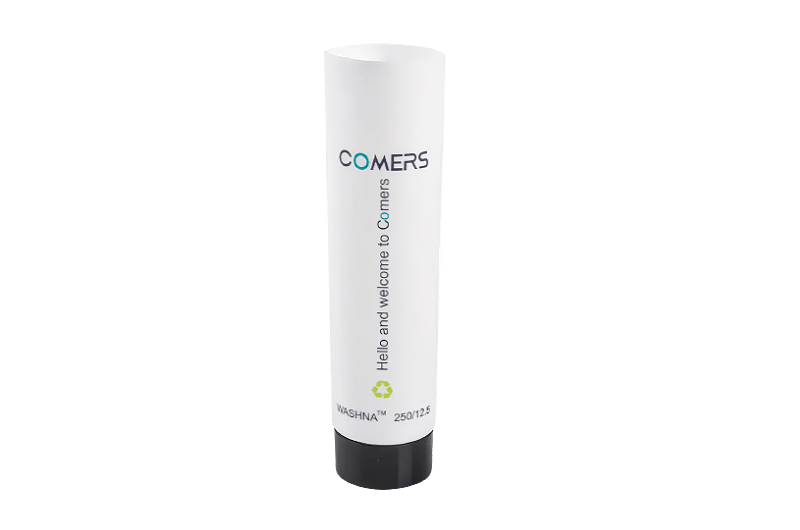
Washna® toothpaste films
+ Suitable for products in paste form
+ High stiffness and good mechanical properties
+ APR approval, Blow-molded in a single blow-molding
+ EVOH≤5%, in line with CEFLEX
+ white/transparent/ultra-white variants (customizable whiteness)
+ Precise thickness control (175−350μm±3%)
+ Excellent puncture resistance
+ Speckle-free surfaces (GB/T 28117 compliant)
+ Reduces environmental impact -
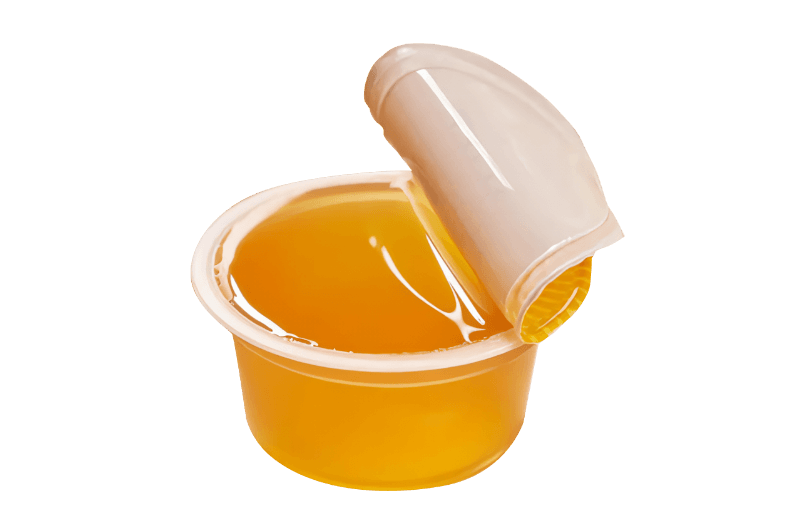
Washna® Laminate films
+ Operates with high-volume film
+ ultimate cost control
+ Good level of crystal point and black point control
+ Customizable with thickness and EVOH ratio
+ Easy-open End (EOE) functionality
+ Preserves freshness and extends shelf life
+ Odor-neutral composition
-
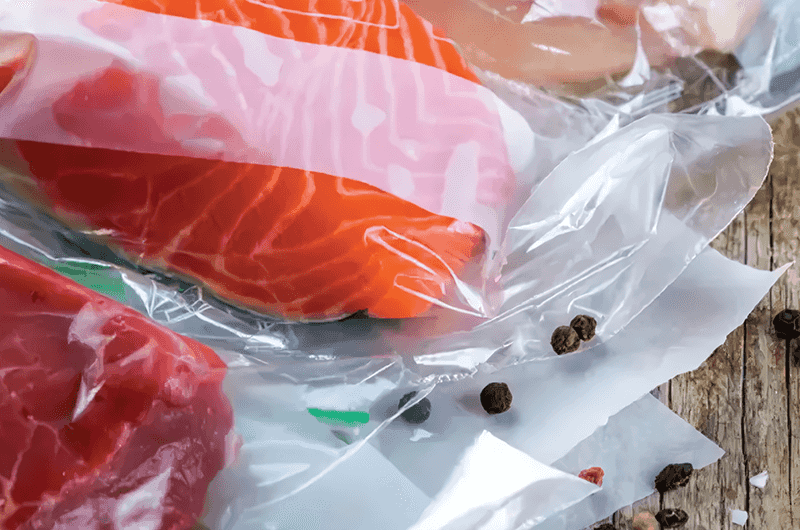
Agometa ® Frozen Vacuum Packaging Bags/Films
+ Excellent transparency
+ Good barrier against water vapor and oxygen
+ Heat sealing performance
+ Adds ultra-high barrier properties
+ high-end food market
+ stable performance, flexible and versatile
+ Good puncture resistance
Jiangsu Comers Neo Materials Co., Ltd.
No.161 Cailing Road, Linhu Town, Wuzhong District, Suzhou City, Jiangsu Province, China.
+86-0512-66558319
E-mail: [email protected]
