

 English
 中文简体
中文简体Child-Friendly Opening Design: Defining Opening Force and User Experience
Content
- 1 What "Child-Friendly Opening" Actually Means in Packaging Engineering
- 2 Defining Opening Force: The Number That Balances Safety and Usability
- 3 Regulatory Benchmarks That Define "Difficult" and "Not Difficult"
- 4 Film Structure and Material Choices That Govern Opening Force
- 5 User Experience Beyond the Force: Cognitive Cues and Multi-Step Design
- 6 Practical Design Considerations for Flexible Packaging Manufacturers
What "Child-Friendly Opening" Actually Means in Packaging Engineering
Two phrases get used interchangeably in packaging discussions, but they describe opposite goals. Child-resistant packaging is engineered to keep children out. Child-friendly opening packaging is engineered to let specific people — caregivers, elderly adults, patients with limited dexterity — open it easily. Understanding which goal you are actually designing for is the starting point for every structural decision that follows.
In the context of flexible packaging films, "child-friendly opening" typically refers to the ease-of-access dimension of a package that also carries child-resistant certification. The package must frustrate children under five while remaining genuinely accessible to the adults who need it. That dual mandate is harder to satisfy than either target in isolation, and it lives almost entirely in the physics of opening force and the psychology of opening cues.
This balance matters beyond compliance. A package that adults struggle to open creates frustration, leads to workarounds (scissors, knives, re-packaging into unsafe containers), and undermines the very safety goal the design was meant to serve.
Defining Opening Force: The Number That Balances Safety and Usability
Opening force is the mechanical energy a user must apply to gain access to package contents. For flexible packaging, this is expressed in one of three ways depending on the opening mechanism: peel force (measured in N or g/25mm), tear initiation force (the energy needed to start a tear from a notch), and zipper separation force (for press-to-close CR zippers). Each of these can be precisely calibrated during film manufacturing and seal development.
Children under five have measurably lower grip and pinch strength than adults. Research in biomechanics consistently places the average lateral pinch force for children aged 42–51 months (the regulatory test cohort) well below that of adults. A peel or zipper force calibrated in the range that requires adult-level grip effectively acts as a physical barrier without requiring complex multi-step sequencing. For food and pharmaceutical flexible packaging, a peel force between roughly 10–25 N for a standard 25mm seal width is often cited in internal development guidelines as sitting in the "accessible for most adults, resistant for most children" zone — though the actual target must always be validated against user panel testing rather than assumed.
The film structure and sealing parameters are the primary levers. Sealant layer resin selection, seal temperature window, dwell time, and the presence of an easy-peel modifier all directly control where the peel force lands. Getting the number right at the development stage prevents costly reformulation after testing reveals the package is either too easy or too hard to open.
Regulatory Benchmarks That Define "Difficult" and "Not Difficult"
The U.S. Consumer Product Safety Commission (CPSC), under the Poison Prevention Packaging Act (PPPA), defines child-resistant packaging in behavioral terms, not force terms. According to the CPSC's official special packaging guidance, a package passes child testing if at least 85% of tested children cannot open it in the first five minutes, and at least 80% cannot open it over the full ten-minute test. On the adult side, at least 90% of senior adults (aged 50–70) must be able to open and properly resecure the package within five minutes.
The regulation, codified at 16 CFR Part 1700, does not specify what opening force achieves these outcomes. That is intentional: force is one mechanism among several (sequential steps, cognitive complexity, grip geometry), and the regulation focuses on results. This means packaging engineers cannot simply hit a force target and consider the job done. Every new structure must be validated through user panel testing to confirm that the behavioral outcome — children out, adults in — is actually achieved.
For manufacturers distributing into European markets, ISO 8317 plays an equivalent role, requiring 80% child resistance over ten minutes and at least 90% success among adults aged 50–70. The behavioral thresholds are similar; the test execution procedures differ in panel recruitment and site requirements. Global brands designing a single film structure for multiple markets need to account for both standards from the earliest development stage.
Film Structure and Material Choices That Govern Opening Force
In flexible packaging, opening force is not a single parameter — it is the sum of multiple layer-level decisions made during film development. The outer structural layers (typically oriented PET or PA) provide mechanical strength and puncture resistance but contribute little to opening behavior. The sealant layer and any easy-peel or easy-open modifier integrated into the structure are what determine how the package actually opens for the end user.
Common structural approaches include:
- Easy-open sealant layers: Resins formulated with controlled cohesive or adhesive failure modes allow the seal to open cleanly at a defined force range without leaving residue or tearing the film unpredictably.
- Asymmetric laminate structures: Placing a stiffer film on one side and a more compliant film on the other creates a predictable peel direction, reducing the user effort needed to initiate opening. Asymmetric PA barrier films are one format used for this purpose in pharmaceutical and food applications.
- Tear notches and laser scoring: A pre-cut notch or score line dramatically reduces tear initiation force at a designated location, directing the tear path and reducing the unpredictability that makes some packages frustrating for users with reduced hand strength.
- EOE (Easy-Open/Easy-Close) zipper systems: For reclosable flexible packaging, CR-certified zipper formats add a required separation force while still permitting clean, single-motion closing for adults.
The sealing process itself is equally important. The relationship between cold seal and heat seal technology and the resulting seal strength directly controls peel force consistency across a production run. Heat seal parameters — temperature, pressure, dwell — must be tightly controlled so that opening force does not vary enough to fail either child or adult testing between batches. Understanding how barrier film properties interact with sealing performance is essential when selecting a structure, since high-barrier layers (EVOH, metallized films) can influence seal integrity and, by extension, opening force if not properly integrated.
User Experience Beyond the Force: Cognitive Cues and Multi-Step Design
Opening force alone does not determine whether a package delivers a good user experience. Research on child-resistant packaging consistently shows that cognitive complexity — the need to understand and execute a sequence of actions — is often as effective a barrier as physical force, and sometimes more so. A two-step mechanism (press, then slide; squeeze, then turn) that requires a specific mental model can resist child access even at relatively low force levels.
For adult users, the same cognitive complexity becomes a source of frustration if the required sequence is not clearly communicated. This is where packaging UX design intersects with structural engineering. Effective child-friendly opening design typically incorporates:
- Directional surface cues: Embossed arrows, matte-finish grip zones, or color differentiation that guide the user's fingers to the correct location and direction before they apply force.
- Clear visual instructions: Printed pictograms showing the opening sequence, placed at or near the opening zone where users will naturally look first.
- Tactile feedback: A distinct click, snap, or resistance change during opening confirms that the mechanism is engaging correctly, reducing the "am I doing this right?" hesitation that causes adults to abandon the attempt.
- Large grip area: For elderly users or patients with arthritis, a wider seal flap or extended tear tab significantly reduces the precision required, translating the same opening force into less demand on fine motor control.
The design of these UX elements should happen alongside structural development, not after. A tear notch placed for manufacturing convenience may land in a location that is difficult to reach for a user with limited hand extension. A grip zone that works for a young adult may be too small for an elderly user wearing gloves.
Practical Design Considerations for Flexible Packaging Manufacturers
Bringing all of these elements together in a single development cycle requires decisions at several levels. The following parameters should be defined before moving to prototype sealing trials:
- Target peel force range: Establish an internal specification (e.g., 12–20 N per 25mm) based on the intended user demographic and the opening mechanism type. This becomes the acceptance criterion for seal development.
- Opening mechanism type: Choose between peel-open (lidding or pouch), tear-open (notch or score), or zipper-open (reclosable) based on product type, required resealability, and end-user profile.
- Sealant layer specification: Define the sealant resin and any easy-peel modifier based on the target force range and the barrier requirements of the product. These two objectives sometimes pull in different directions and need to be reconciled at the formulation stage.
- Seal geometry: Seal width, shape (straight vs. contoured), and flap extension all affect how users grip and pull the package. Wider seals generally produce more consistent peel behavior but require more material.
- UX element placement: Agree on tear notch location, grip zone dimensions, and instruction printing placement before finalizing artwork, not after.
Early-stage testing with actual end users — including elderly adults and users with reduced hand strength — reveals opening force problems that in-lab mechanical testing misses entirely. A peel force that measures correctly on a tensile testing machine may still feel impossible for a 70-year-old user if the grip geometry forces an awkward hand position.
Manufacturers working across multiple flexible packaging material formats for food and pharmaceutical applications benefit from developing a systematic opening-force specification framework rather than addressing it package by package. Standardizing how peel force targets are set, tested, and documented across product lines reduces iteration time and helps ensure compliance testing outcomes are predictable before external panel testing begins. Given the breadth of functional additive options available in modern EOE film formulations, the engineering tools for precise force calibration are more accessible than ever — the challenge is applying them systematically from the earliest stage of development.
-
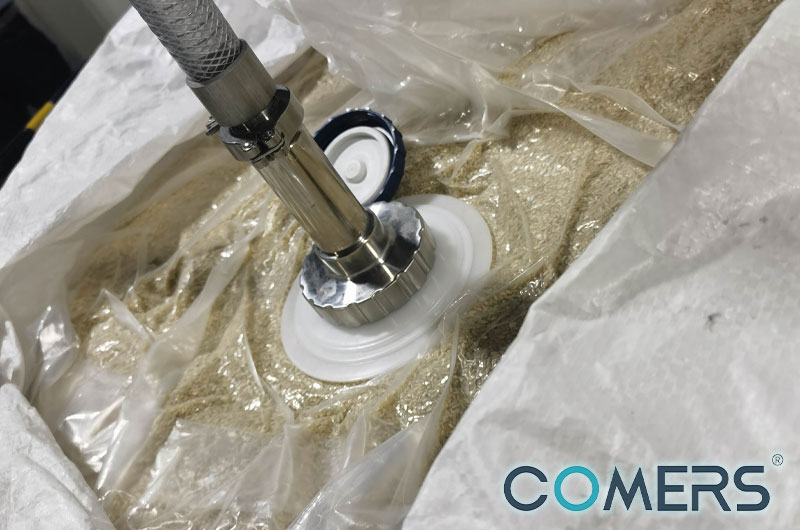
Intertram®FIBC Liners
+ Permanent anti-static / temporary anti-static
+ High barrier performance
+ Single material
+ Prevent from moisture, oxygen(low WVTR<3.0,OTR<1.0)
+ Various film types and thicknesses (Length:1M1-2M2 Thinkness:30-160um)
+ For milk powder/ coffee powder
+ Effective barrier and product protection
+ Strict quality control and safety standards
+ Highly customizable solutions
+ Durable and puncture-resistant
-
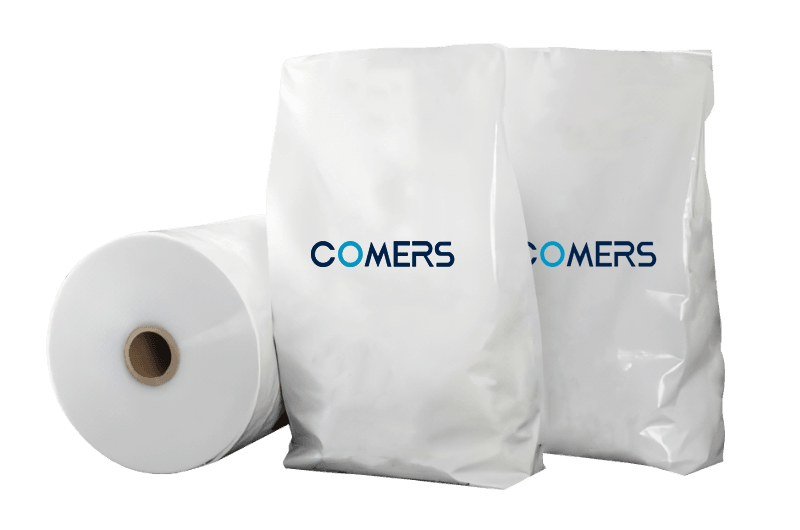
Intertram®FFS Liners
+ high barrier performance
+ prevent from moisture, oxygen(low WVTR<3.0,OTR<1.0)
+ various film types and thicknesses (Length:1M1-2M2 Thinkness:30-160um)
+ can replace Al material
+ High standard in food safety
+ Anti-static film (ATEX prevention)
+ Strict control over contaminants (BPA, Sakazaki-bacillus, etc.)
+ Tailored to customer needs
+ Enhanced product shelf life (approx. 6 months)
-

Washna ® Easy-peel films
+ prevent from moisture, oxygen(low WVTR<3.0,OTR<1.0)
+ various film types and thicknesses (Thickness:45 - 90um)
+ Clean & Safe Delamination
+ smooth sealing layer without wire drawing
+ Optimal Peel Performance
+ Good control level of black dot crystal point, in line with GB/T28117
+ Food contact safety
+ High durability
+ Superior barrier properties
+ Child-friendly opening
+ Clean, residue-free peel -
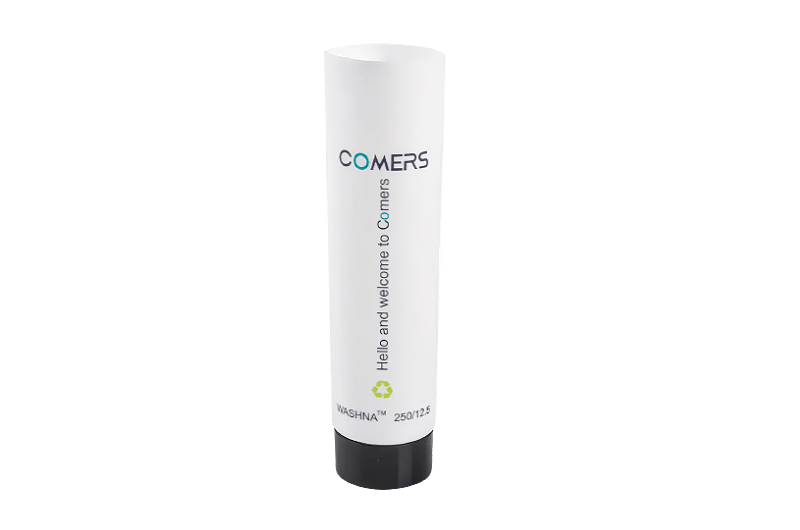
Washna® toothpaste films
+ Suitable for products in paste form
+ High stiffness and good mechanical properties
+ APR approval, Blow-molded in a single blow-molding
+ EVOH≤5%, in line with CEFLEX
+ white/transparent/ultra-white variants (customizable whiteness)
+ Precise thickness control (175−350μm±3%)
+ Excellent puncture resistance
+ Speckle-free surfaces (GB/T 28117 compliant)
+ Reduces environmental impact -

Washna® Laminate films
+ Operates with high-volume film
+ ultimate cost control
+ Good level of crystal point and black point control
+ Customizable with thickness and EVOH ratio
+ Easy-open End (EOE) functionality
+ Preserves freshness and extends shelf life
+ Odor-neutral composition
-
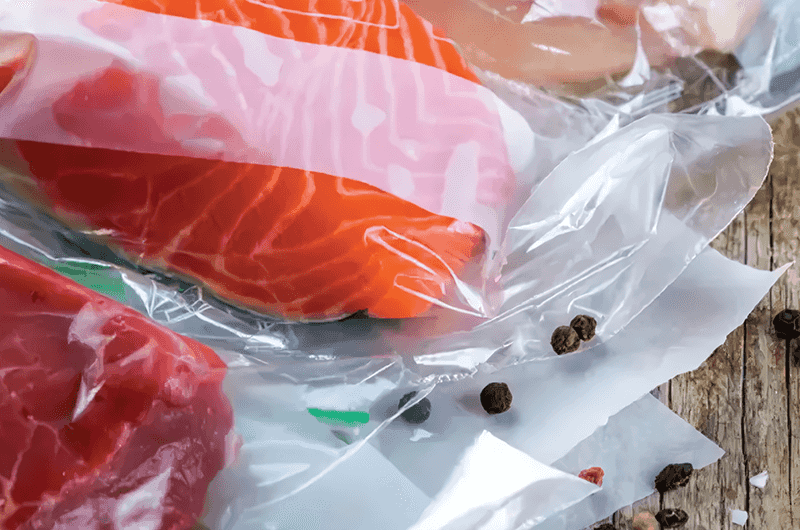
Agometa ® Frozen Vacuum Packaging Bags/Films
+ Excellent transparency
+ Good barrier against water vapor and oxygen
+ Heat sealing performance
+ Adds ultra-high barrier properties
+ high-end food market
+ stable performance, flexible and versatile
+ Good puncture resistance
Jiangsu Comers Neo Materials Co., Ltd.
No.161 Cailing Road, Linhu Town, Wuzhong District, Suzhou City, Jiangsu Province, China.
+86-0512-66558319
E-mail: [email protected]
