

 English
 中文简体
中文简体Thickness Tolerance Control in Tube Laminates: What Impacts Yield
What matters is how far from that number your process drifts, and how consistently you catch it before it costs you a production run. Thickness tolerance is the single specification that sits upstream of almost every yield problem in tube laminate manufacturing: poor seals, failed forming, barrier failures, print misregistration. Yet it receives far less engineering attention than the barrier chemistry or the printing process it directly supports.
This article breaks down where thickness variation originates in tube laminate films and multi-layer packaging materials, how each source compounds into a final-product problem, and what control levers actually move the needle on yield.
Why Thickness Tolerance Is the Hidden Driver of Yield
Tube laminate specifications typically express thickness in two figures: BT (barrier thickness) and TT (total thickness), both in microns. A common ABL spec might read 20/350 — meaning a 20 µm aluminum barrier within a 350 µm total laminate structure. These numbers are targets. The tolerance window around them is where yield lives.
A laminate running at the thin edge of its TT tolerance will form tubes with insufficient body stiffness, causing collapse during fill-line handling or unacceptable deadfold recovery after squeezing. Running thick consumes excess material, raises cost-per-unit, and can cause the web to jam in tube-forming mandrels designed to tighter clearances. Neither extreme is neutral — both translate directly into rejected units or line stoppages.
What makes thickness particularly consequential is that it isn't a single-point failure. It's a multiplier: a 5% thickness deviation at the raw film stage can interact with a temperature drift at the lamination press and a tension instability at tube forming to produce a yield loss disproportionately larger than any single factor would suggest.
How the Multi-Layer Structure Creates Compounding Variance
ABL and PBL laminates are not single-material films. An ABL structure typically consists of three to five distinct layers: an outer polyethylene layer for printability, one or two copolymer tie layers for adhesion, the aluminum foil barrier, and an inner polyethylene sealant layer. A PBL structure replaces the aluminum with an EVOH barrier, surrounded by polyethylene and adhesive layers — often five layers total.
Each of those layers carries its own thickness tolerance from its respective supply source. Outer PE films from blown-film extrusion typically hold ±3–8% of nominal thickness. Aluminum foil arrives with ±5–10% variation depending on gauge and supplier grade. EVOH barrier films, being more process-sensitive, can vary ±5% at best. Adhesive coating weights add another variable. None of these are defects — they are normal manufacturing distributions.
The problem is that these independent distributions don't cancel each other out in a multi-layer laminate; they accumulate. A five-layer PBL structure where every layer is simultaneously at the high end of its tolerance range will produce a laminate noticeably above nominal TT. Statistically, the probability of all layers landing simultaneously at the extremes is low — but the probability of the total thickness drifting meaningfully from nominal is much higher than any single-layer analysis would imply. packaging material solutions for food and bioscience industries with demanding barrier specifications are especially sensitive to this compounding effect, since their BT layers tend to be thinner and proportionally more variable.
Process Variables That Amplify or Correct Deviations
Even with well-controlled incoming materials, the lamination and tube-forming processes introduce their own thickness variables. The critical process parameters are temperature, pressure, speed, and tension — and they interact.
Lamination nip pressure and temperature are the primary compression variables. Excess nip pressure at the lamination station can thin the adhesive bond line and slightly compress thermoplastic layers, reducing total thickness below nominal. Insufficient pressure produces irregular adhesive spread, creating localized thick spots that fail seal integrity tests. Temperature interacts with both: at elevated temperatures, PE layers soften and deform more under nip load, amplifying the pressure effect.
Web tension affects thickness indirectly but significantly. A film web running under excessive tension is mechanically stretched — which reduces its cross-sectional thickness. This effect is most pronounced in thin, low-stiffness EVOH barrier films. A tension spike during a splice can produce a localized thin zone in the laminate that has no visual indicator but fails barrier integrity testing.
Line speed stability matters because heat transfer to the laminate is time-dependent. Speed variations during a run change the dwell time of the web in the heated nip zone, producing corresponding variation in layer compression and total thickness — even when temperature and pressure setpoints are held constant.
At the tube-forming stage, thickness deviations inherited from the lamination process are amplified by mandrel fit. Tube-forming machines are tooled to work with a specific TT range. A laminate at the top of its tolerance window will produce tubes with tighter mandrel clearance, increasing the risk of scoring the inner PE layer — a failure mode that compromises both barrier integrity and sealability.
Practical Approaches to Tighter Thickness Control
The control methods that consistently improve yield share a common principle: they measure early and measure continuously, rather than relying on end-of-line sampling to catch what upstream processes have already produced.
In-line laser or beta-gauge thickness measurement at the lamination line is the most impactful single investment. Scanning gauges that traverse the web width in real time generate cross-web thickness profiles, catching edge-thinning and center-to-edge gradients before they accumulate across thousands of meters of coil. Closed-loop systems that feed thickness data back to nip pressure or tension controls can hold total thickness variation to ±2–3% of nominal — roughly half the variation achievable with offline spot-check sampling alone.
Statistical process control (SPC) charting for thickness at both the incoming material and lamination stages makes variation trends visible before they become rejections. Control charts for TT with ±3σ control limits — separate from specification limits — identify process drift while the process is still producing conforming product, allowing correction without a quality event.
Incoming material acceptance protocols should require roll-level thickness data rather than lot-average certificates. For critical applications, cross-web thickness profiles from the film supplier enable manufacturing teams to compensate for known incoming gradients through nip angle adjustment or tension profiling during lamination.
Measurement method standardization matters more than most teams realize. Contact-micrometer readings, non-contact laser measurements, and beta-gauge readings of the same film can differ by 1–3 µm due to deformation effects and measurement geometry. Aligning on a consistent method — ideally traceable to standards such as those described in the ASTM F2251 methodology for flexible packaging film thickness — eliminates measurement disagreements between supplier and converter that routinely produce false rejections and unnecessary rework. Guidance on instrument selection and foot-pressure requirements for flexible laminates is covered in detail in thickness measurement best practices for plastic packaging films.
Tighter tolerance control doesn't have to mean higher material cost. Converters who invest in process control infrastructure consistently find that the yield improvement — fewer rejected batches, less downtime, lower rework rates — more than offsets the investment within 12–18 months of implementation. The key is treating thickness not as a received specification to check at the end, but as a process variable to manage from raw material intake through tube forming. For further reference and technical guidance, see Comers' latest packaging industry updates and technical news.
-
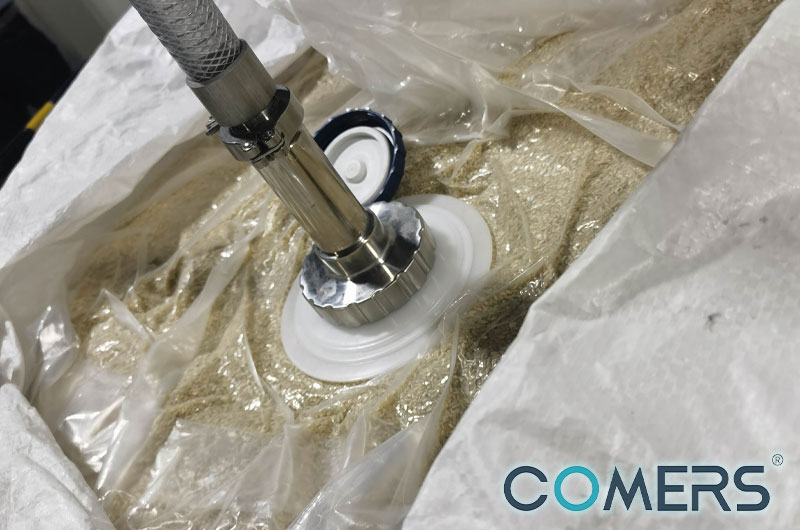
Intertram®FIBC Liners
+ Permanent anti-static / temporary anti-static
+ High barrier performance
+ Single material
+ Prevent from moisture, oxygen(low WVTR<3.0,OTR<1.0)
+ Various film types and thicknesses (Length:1M1-2M2 Thinkness:30-160um)
+ For milk powder/ coffee powder
+ Effective barrier and product protection
+ Strict quality control and safety standards
+ Highly customizable solutions
+ Durable and puncture-resistant
-

Intertram®FFS Liners
+ high barrier performance
+ prevent from moisture, oxygen(low WVTR<3.0,OTR<1.0)
+ various film types and thicknesses (Length:1M1-2M2 Thinkness:30-160um)
+ can replace Al material
+ High standard in food safety
+ Anti-static film (ATEX prevention)
+ Strict control over contaminants (BPA, Sakazaki-bacillus, etc.)
+ Tailored to customer needs
+ Enhanced product shelf life (approx. 6 months)
-

Washna ® Easy-peel films
+ prevent from moisture, oxygen(low WVTR<3.0,OTR<1.0)
+ various film types and thicknesses (Thickness:45 - 90um)
+ Clean & Safe Delamination
+ smooth sealing layer without wire drawing
+ Optimal Peel Performance
+ Good control level of black dot crystal point, in line with GB/T28117
+ Food contact safety
+ High durability
+ Superior barrier properties
+ Child-friendly opening
+ Clean, residue-free peel -
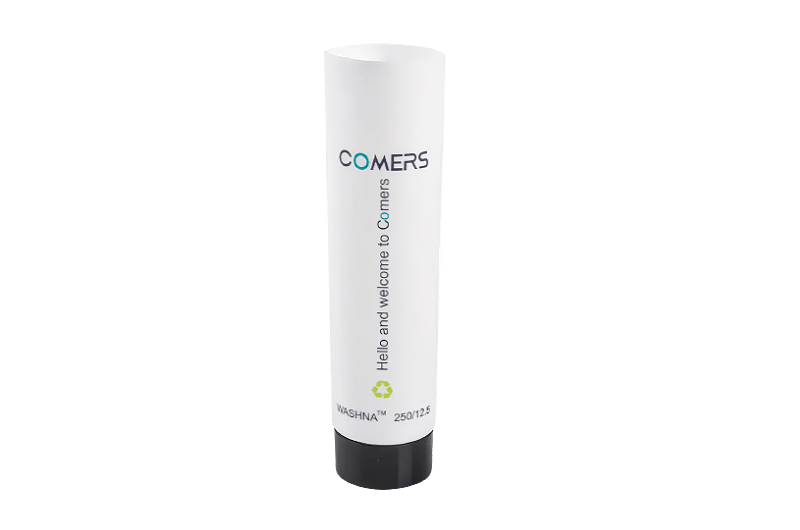
Washna® toothpaste films
+ Suitable for products in paste form
+ High stiffness and good mechanical properties
+ APR approval, Blow-molded in a single blow-molding
+ EVOH≤5%, in line with CEFLEX
+ white/transparent/ultra-white variants (customizable whiteness)
+ Precise thickness control (175−350μm±3%)
+ Excellent puncture resistance
+ Speckle-free surfaces (GB/T 28117 compliant)
+ Reduces environmental impact -

Washna® Laminate films
+ Operates with high-volume film
+ ultimate cost control
+ Good level of crystal point and black point control
+ Customizable with thickness and EVOH ratio
+ Easy-open End (EOE) functionality
+ Preserves freshness and extends shelf life
+ Odor-neutral composition
-
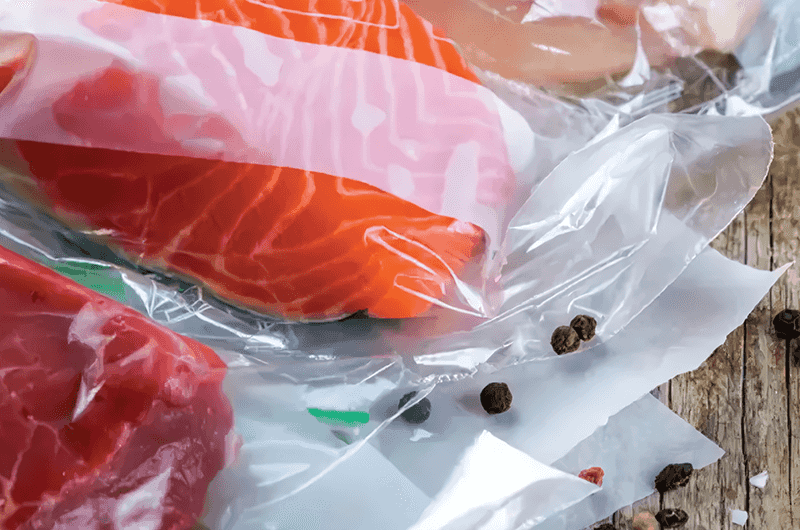
Agometa ® Frozen Vacuum Packaging Bags/Films
+ Excellent transparency
+ Good barrier against water vapor and oxygen
+ Heat sealing performance
+ Adds ultra-high barrier properties
+ high-end food market
+ stable performance, flexible and versatile
+ Good puncture resistance
Jiangsu Comers Neo Materials Co., Ltd.
No.161 Cailing Road, Linhu Town, Wuzhong District, Suzhou City, Jiangsu Province, China.
+86-0512-66558319
E-mail: [email protected]
