

 English
 中文简体
中文简体Release Liner Recycling: Cost-Benefit Analysis & Material Comparison Guide
Content
- 1 What Is Release Liner and Why Does Recycling It Matter?
- 2 The Four Main Types of Release Liner and Their Recyclability
- 3 The Top 3 Obstacles to Release Liner Recycling (and How to Overcome Them)
- 4 A Practical Guide: How to Start Recycling Your Release Liner
- 5 The Economics of Release Liner Recycling: Costs vs. Benefits
- 6 Designing for Recyclability: How to Choose the Right Liner
- 7 Case Study: Reducing Waste by Switching to Recyclable Liners
- 8 The Future of Release Liner Recycling: TLMI's LRI and Beyond
What Is Release Liner and Why Does Recycling It Matter?
Every year, the global label and packaging industry produces an estimated 3.3 million metric tons of release liner. Roughly 70% of it still ends up in landfills or incinerators. That is a staggering figure, and it means your business is almost certainly contributing to the problem.
A release liner is the backing sheet that protects the adhesive on labels, tapes, medical patches, and industrial films until application. Once peeled away, it becomes instant waste. Yet the materials used in release liners — paper fibers, PET, PP, HDPE — have genuine secondary market value. Recycling them is technically feasible. The gap between that feasibility and the 30% landfill diversion rate comes down to logistics, contamination, and cost.
The commercial incentive is shifting fast. Major brands now mandate recycled-content packaging. Retailers audit supplier waste streams. Carbon disclosure requirements are expanding beyond publicly traded companies to private suppliers. A converter that can document a release liner recycling program gains a measurable edge in RFPs and contract renewals. This guide lays out exactly what you need to know to turn a waste stream into a defensible sustainability asset.
The Four Main Types of Release Liner and Their Recyclability
Not all release liners are equal in a recycling facility. The base material dictates the available recovery pathway, the processing cost, and the quality of the recycled output. Below is a side-by-side comparison of the four substrates you are most likely to encounter.
Paper-based liners dominate the market and benefit from an established recovery infrastructure through mills like Sustana Fiber in Wisconsin and Quebec. The float de-inking process strips silicone coatings effectively, making white paper release liner one of the more recyclable options available. PET liners deliver the highest carbon savings per ton recycled, but their downstream fate is complicated — once converted into fiber insulation, they are no longer curbside recyclable and can contaminate single-stream systems. PP and HDPE liners remain niche but are gaining traction in industrial packaging applications where collection routes are controlled.
The Top 3 Obstacles to Release Liner Recycling (and How to Overcome Them)
Every recycling manager we speak with hits the same three walls. The good news: solutions exist for each one. The challenge is matching the right solution to your volume, geography, and substrate.
Obstacle 1: Silicone Coating Contamination
Silicone is a persistent contaminant in conventional paper recycling. Standard pulping does not remove it, leaving specks and defects in the finished sheet. The fix is float de-inking — a process specifically designed to separate silicone, ink, and other lightweight contaminants from pulp fibers. Sustana Fiber's mills run this process at commercial scale. The catch: they accept primarily white, silicone-coated paper liners. Colored or printed liners may still face rejection.
Obstacle 2: Adhesive Residue
Even after the liner is peeled, trace adhesive remains on the surface. This residue gums up shredders, clogs screens, and degrades recycled pellet quality. Water-washable adhesives are now available from multiple suppliers. When combined with warm-water washing stages at the recycler, adhesive removal rates exceed 95%. If you control liner specification, specifying water-washable adhesives is the single highest-impact design choice you can make for end-of-life recovery.
Obstacle 3: Mixed Material Collection
When paper, PET, and PP liners are baled together, the entire bale may be rejected or downcycled. Near-infrared (NIR) sorting can separate polymer types, but the equipment is expensive and not universally deployed. The practical solution is source segregation: train operators to separate liners by substrate at the point of waste generation. This adds labor but preserves material value. Some converters use color-coded collection bins and simple visual guides to make separation foolproof.
A Practical Guide: How to Start Recycling Your Release Liner
You do not need a corporate sustainability department to launch a liner recycling program. Follow these five steps, and you can have a working system within 90 days.
- Audit your waste stream. Identify every point in your operation where release liner is generated. Document the substrate type (paper, PET, PP, HDPE), approximate monthly volume in pounds, and current disposal method. You need at least 2,000 pounds per month to interest most commercial recyclers.
- Match substrate to recycler. Paper liners go to mills like Sustana Fiber. PET liners may be accepted by APR-certified reclaimers. PP and HDPE require specialized plastics recyclers. The TLMI Liner Recycling Map provides a searchable directory by region and material type.
- Establish collection and baling protocols. Liners must be clean, dry, and free of labels, tape, or mixed materials. Invest in a small baler if you generate over 5,000 pounds monthly. Otherwise, use gaylord boxes on pallets and arrange less-than-truckload (LTL) pickup.
- Negotiate terms. Some recyclers pay for baled paper liners ($20–$60 per ton). Most charge a tipping fee for plastics ($50–$150 per ton). Factor freight costs into your budget — they often exceed the material value.
- Document and report. Track tonnage diverted, calculate carbon savings using the formula below, and share results with your commercial team. The data supports customer sustainability reports and strengthens RFP responses.
Carbon savings formula: Carbon Reduction (kg CO2e) = Tonnage Recycled × (Virgin Material Carbon Footprint - Recycling Process Footprint). For siliconized paper, use 1,524 kg CO2e per ton. For PET, use 3,089 kg CO2e per ton. These figures come from Avery Dennison's published lifecycle data.
The Economics of Release Liner Recycling: Costs vs. Benefits
Let us be direct: recycling release liner rarely generates a net cash profit for the converter. The economics work through avoided costs, customer retention, and risk mitigation.
A mid-sized label converter generating 8,000 pounds of paper liner monthly pays roughly $400 per month in landfill tipping fees at $60 per ton. Shifting to a recycling program might incur a $40 per ton processing fee plus $300 per month in freight — netting out to roughly break-even on disposal costs. The real value emerges elsewhere: a retail customer requiring suppliers to divert 50% of waste from landfill by 2027, or a medical device manufacturer that awards contracts partly on documented sustainability metrics. These commercial drivers dwarf the operational line item.
The table reveals a $350 per month cost premium. But convert one additional customer contract worth $50,000 in annual revenue because you can document a waste diversion program, and the premium vanishes. The economic case for recycling is a commercial case dressed in operational clothing. Evaluate it accordingly.
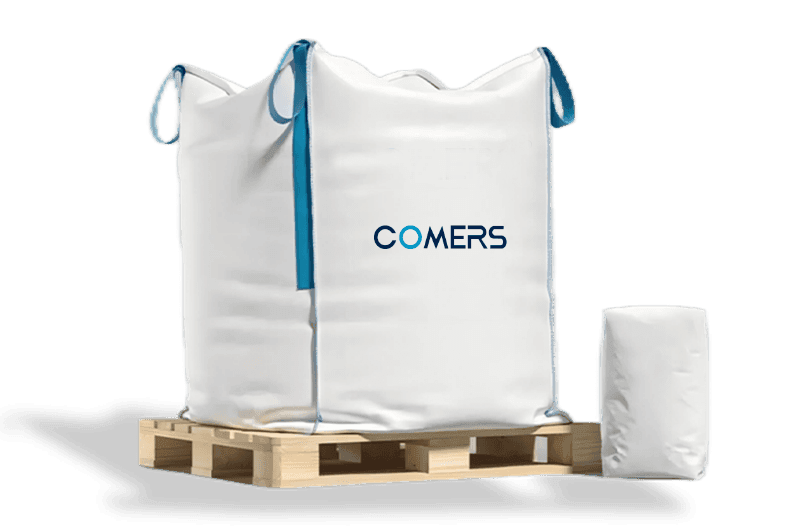
For converters seeking liner materials engineered with end-of-life recovery in mind, explore high-performance FIBC and FFS liner solutions that support cleaner recycling streams through material consistency and reduced contamination.
Designing for Recyclability: How to Choose the Right Liner
Procurement decisions made at the specification stage determine whether a liner can be recycled downstream. Embedding recyclability into your sourcing criteria costs little and pays dividends when disposal contracts come up for renewal.
Five principles of recyclable liner design:
- Use water-washable adhesives. They enable adhesive removal in standard warm-water baths at the recycler. Avoid permanent and hot-melt adhesives where possible.
- Avoid metalized coatings. Aluminum and other metallization layers render both paper and plastic liners unrecyclable in standard streams. Choose transparent or pigmented barrier coatings instead.
- Select single-material structures. A 100% PET liner with a PET-compatible release coating recycles more cleanly than a multi-layer laminate. Mono-material construction is the gold standard.
- Minimize ink coverage. Heavy ink coverage introduces contaminants that survive pulping. Keep branding on the liner itself to a minimum, and use low-metal-content inks when printing is unavoidable.
- Add recognizable recycling labels. How2Recycle and APR labels on the liner itself help downstream sorters route material correctly. They also serve as a visible sustainability signal to your customers.
When your application demands barrier performance without sacrificing recyclability, it is worth evaluating how film structure affects the overall waste profile. Our analysis of AHE barrier film recycling and environmental considerations provides a deeper look at the trade-offs between barrier requirements and end-of-life options.
Case Study: Reducing Waste by Switching to Recyclable Liners
A specialty food label converter in the Midwest was landfilling 12,000 pounds of siliconized paper release liner per month. Their largest customer, a national organic brand, announced a supplier mandate requiring documented waste diversion from landfill by Q3 2025.
The converter took three actions within 60 days. First, they audited their liner waste and confirmed it was 98% white paper substrate suitable for float de-inking. Second, they partnered with a regional aggregator that baled and shipped liners to a Sustana Fiber mill. Third, they trained their press operators to separate liners at each work station using clearly marked bins.
Within the first full year, the converter diverted 144,000 pounds (72 tons) of release liner from landfill. Using the 1,524 kg CO2e per ton figure, that equates to roughly 110 metric tons of CO2e avoided. The program added roughly $4,800 in annual operational costs — but the customer contract it protected was worth $180,000 in annual revenue. The math spoke for itself. The converter has since expanded the program to two additional facilities.
The Future of Release Liner Recycling: TLMI's LRI and Beyond
In mid-2024, TLMI launched the Liner Recycling Initiative (LRI) with consulting partner Resource Recycling Systems (RRS) and mill partner Sustana Solutions. The pilot targeted paper release liner exclusively, using Sustana's float de-inking capacity in De Pere, Wisconsin and Levis, Quebec to process collected material. Early results confirmed that logistics cost — not technical capability — was the binding constraint on scaling collection.
Sustana operates eight recovery locations capable of aggregating silicone-coated paper release liner, but geographic coverage remains thin across the Western U.S. and the Southeast. Expanding that footprint is the LRI's stated priority for 2025–2026. For converters outside current service areas, the short-term option may be backhauling liners through existing freight relationships or pooling volumes with nearby facilities.
Beyond paper, chemical recycling technologies are advancing for PET and PP liners. These processes break polymers down to monomer-level materials that can be repolymerized into virgin-quality resin — solving the quality degradation problem that limits mechanical recycling. Commercial-scale chemical recycling for mixed plastic liners is likely 3–5 years from mainstream availability, but pilot plants are operational in Europe and Texas. The trajectory is clear: release liner recycling will shift from a niche sustainability initiative to a standard operational expectation within this decade.
For converters looking to get ahead of that curve, material selection today sets the ceiling on recyclability tomorrow. Read our moisture barrier FIBC liner guide for detailed specifications that align performance requirements with end-of-life recovery potential.
-
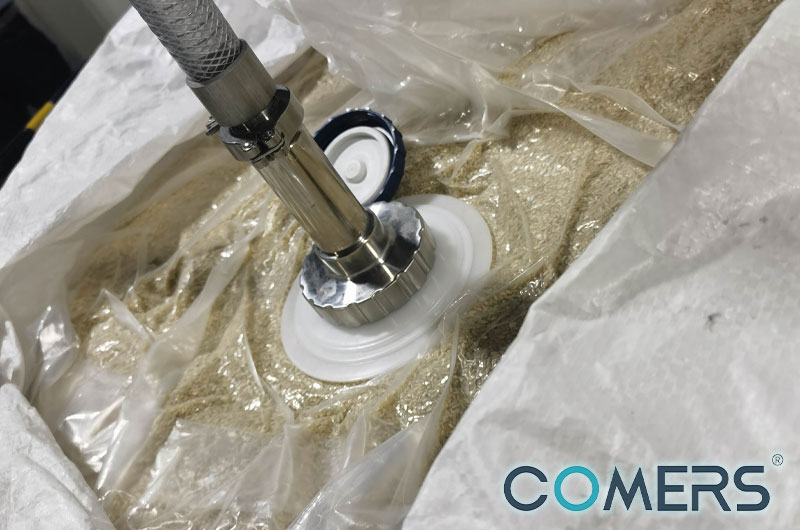
Intertram®FIBC Liners
+ Permanent anti-static / temporary anti-static
+ High barrier performance
+ Single material
+ Prevent from moisture, oxygen(low WVTR<3.0,OTR<1.0)
+ Various film types and thicknesses (Length:1M1-2M2 Thinkness:30-160um)
+ For milk powder/ coffee powder
+ Effective barrier and product protection
+ Strict quality control and safety standards
+ Highly customizable solutions
+ Durable and puncture-resistant
-
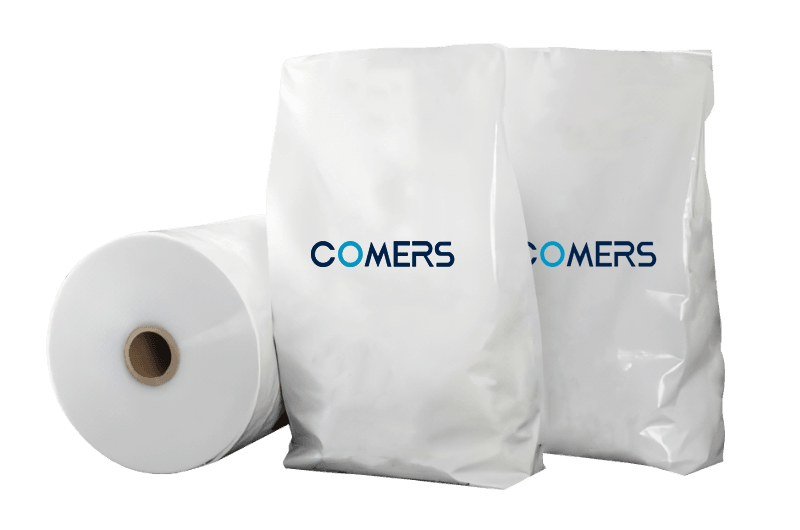
Intertram®FFS Liners
+ high barrier performance
+ prevent from moisture, oxygen(low WVTR<3.0,OTR<1.0)
+ various film types and thicknesses (Length:1M1-2M2 Thinkness:30-160um)
+ can replace Al material
+ High standard in food safety
+ Anti-static film (ATEX prevention)
+ Strict control over contaminants (BPA, Sakazaki-bacillus, etc.)
+ Tailored to customer needs
+ Enhanced product shelf life (approx. 6 months)
-
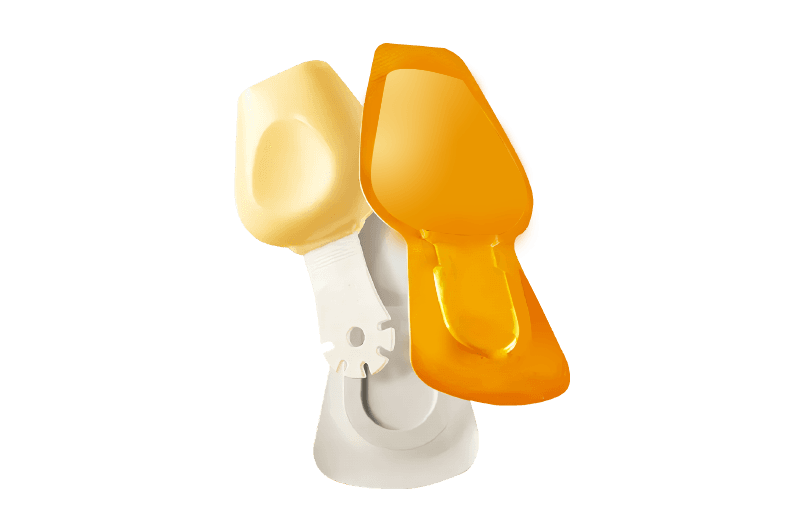
Washna ® Easy-peel films
+ prevent from moisture, oxygen(low WVTR<3.0,OTR<1.0)
+ various film types and thicknesses (Thickness:45 - 90um)
+ Clean & Safe Delamination
+ smooth sealing layer without wire drawing
+ Optimal Peel Performance
+ Good control level of black dot crystal point, in line with GB/T28117
+ Food contact safety
+ High durability
+ Superior barrier properties
+ Child-friendly opening
+ Clean, residue-free peel -
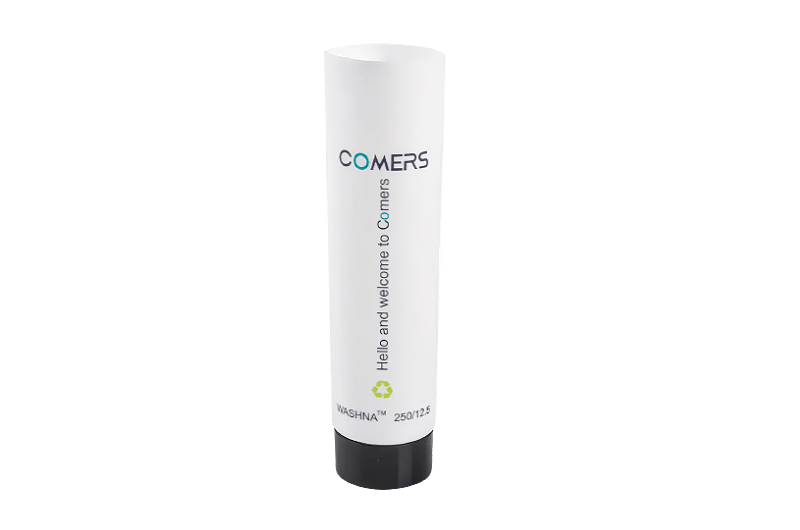
Washna® toothpaste films
+ Suitable for products in paste form
+ High stiffness and good mechanical properties
+ APR approval, Blow-molded in a single blow-molding
+ EVOH≤5%, in line with CEFLEX
+ white/transparent/ultra-white variants (customizable whiteness)
+ Precise thickness control (175−350μm±3%)
+ Excellent puncture resistance
+ Speckle-free surfaces (GB/T 28117 compliant)
+ Reduces environmental impact -
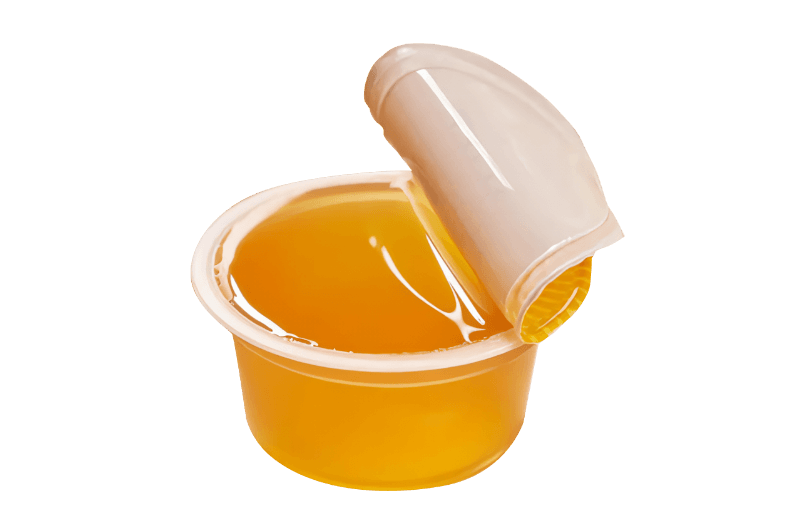
Washna® Laminate films
+ Operates with high-volume film
+ ultimate cost control
+ Good level of crystal point and black point control
+ Customizable with thickness and EVOH ratio
+ Easy-open End (EOE) functionality
+ Preserves freshness and extends shelf life
+ Odor-neutral composition
-
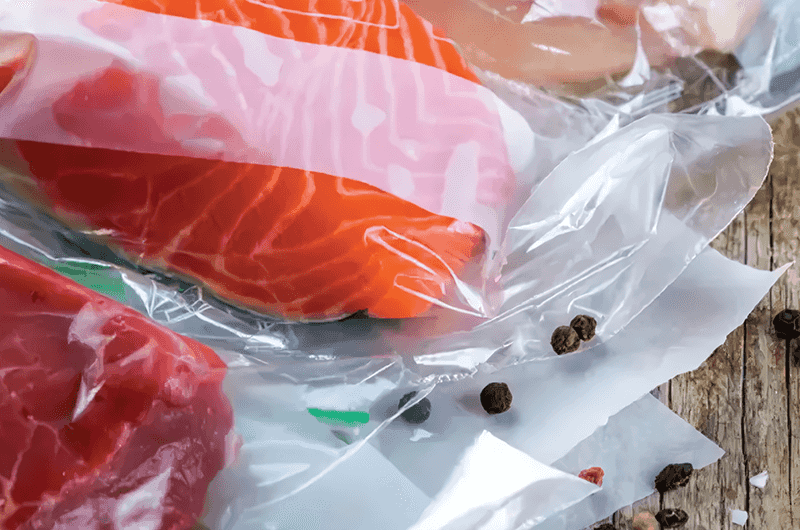
Agometa ® Frozen Vacuum Packaging Bags/Films
+ Excellent transparency
+ Good barrier against water vapor and oxygen
+ Heat sealing performance
+ Adds ultra-high barrier properties
+ high-end food market
+ stable performance, flexible and versatile
+ Good puncture resistance
Jiangsu Comers Neo Materials Co., Ltd.
No.161 Cailing Road, Linhu Town, Wuzhong District, Suzhou City, Jiangsu Province, China.
+86-0512-66558319
E-mail: [email protected]
