

 English
 中文简体
中文简体Barrier Degradation in Vacuum Packs: Assessing Shelf-Life Risk
Content
- 1 When the Seal Looks Fine but the Barrier Isn't
- 2 The Main Pathways Barriers Actually Fail
- 3 The Metrics That Actually Predict Shelf-Life Risk
- 4 Building a Practical Risk Assessment Framework
- 5 Early Warning Signs Worth Watching on the Floor
- 6 Material Selection as a Risk-Reduction Lever
- 7 Turning Assessment Into an Ongoing Practice
When the Seal Looks Fine but the Barrier Isn't
A vacuum-sealed pouch can hold its collapsed shape for weeks and still let the product inside go rancid, discolor, or grow mold. The bag hasn't lost vacuum in any way a warehouse worker would notice, yet the oxygen transmission rate has quietly climbed past the level the formulation was designed to tolerate. This is the core difficulty with barrier degradation: it rarely announces itself the way a torn bag or a failed seal does. It shows up first in the product, often after the pouch has already left the plant.
Assessing shelf-life risk means treating the barrier as a variable that changes over time and handling stress, not a fixed spec printed on a data sheet. The material that passed incoming inspection at 0.5 cc/m²/day OTR is not necessarily the same material performing inside a folded, retorted, or repeatedly flexed pouch six months later.
The Main Pathways Barriers Actually Fail
Barrier loss in flexible vacuum packaging tends to trace back to a handful of recurring mechanisms, and most shelf-life surprises come from underestimating one of them.
- Delamination and interlayer separation — heat and moisture during retort or hot-fill processing can weaken the bond between the barrier layer (commonly EVOH or aluminum oxide coatings) and adjacent film layers, creating microchannels for gas ingress even when the outer film looks intact.
- Flex-cracking of coated or metallized layers — vacuum packs fold sharply around irregular product contours. Ceramic-coated or metallized barrier layers are brittle relative to the polymer film carrying them, and repeated flexing at the fold lines fractures the coating at a microscopic scale.
- Pinholing from abrasion and puncture — bone fragments, rigid packaging edges, or pallet-to-pallet contact during transit create pinholes too small for a visual seal check to catch but large enough to shift OTR by an order of magnitude.
- Seal-zone creep and channel leaks — contamination in the seal area (fat, powder, moisture) or an undersized heat-seal window produces microscopic channels along the seal rather than a clean bond, which is a different failure mode from bulk-film barrier loss but produces the same symptom: early spoilage.
Diagnosing which mechanism is responsible matters because the fix is different in each case. A delamination problem calls for a review of the retort profile and adhesive tie-layer, while a seal-zone issue is usually resolved through adjusting the temperature, dwell time, and pressure of the sealing process rather than swapping the film structure entirely. Teams that jump straight to a costly material change often miss a process root cause that was cheaper to fix.
The Metrics That Actually Predict Shelf-Life Risk
Oxygen transmission rate (OTR) and water vapor transmission rate (WVTR) remain the two numbers that correlate most directly with shelf life for oxygen-sensitive or moisture-sensitive products, but a single spec-sheet value tells you almost nothing about risk over time. What matters is how those values shift under the conditions the pack will actually experience — elevated humidity, post-retort thermal stress, repeated flex cycles, and cold-chain temperature swings.
Standardized methods such as the coulometric sensor procedure defined in ASTM's oxygen gas transmission rate test method for plastic film and sheeting give a controlled, comparable baseline, but that baseline is measured on flat, unstressed film. A pouch that meets spec on a coupon test can still underperform once it has been folded, retorted, and stacked. Mature risk assessments therefore run OTR and WVTR tests twice: once on virgin material as a baseline, and again on film that has been through simulated flex-crack, thermal, and abrasion cycling meant to approximate real handling. The delta between those two numbers, not the baseline alone, is what predicts field risk. Teams new to reading these values side by side often find it useful to walk through a structured explanation of how WVTR and OTR figures translate into real barrier performance before setting acceptance thresholds.
Building a Practical Risk Assessment Framework
A workable framework doesn't require a full analytical lab. It requires three layers of testing applied consistently, each answering a different question.
- Baseline characterization. Confirm OTR and WVTR on incoming film lots against the agreed specification, using consistent temperature and humidity conditions so results are comparable batch to batch.
- Accelerated aging under representative stress. Subject sealed pouches to thermal cycling, compression, and flex testing that mimics distribution and storage, then re-measure barrier performance. This step exposes delamination and flex-crack risk that flat-film testing misses entirely.
- Real-time or near-real-time verification. Pull samples at intervals across the intended shelf life and track actual product quality indicators — oxidation, moisture content, microbial load — against the barrier data. This closes the loop between what the film measures and what the product experiences.
The output of this framework should be a defined tolerance band: the maximum acceptable OTR or WVTR drift before shelf-life claims are no longer supportable. Without that band, "the barrier degraded" is a qualitative observation rather than a decision point.
Early Warning Signs Worth Watching on the Floor
Lab data catches problems before they reach the customer, but production-floor observation catches them faster and cheaper. A few signals are worth building into routine QA checks rather than waiting for a full barrier retest.
- Loss of pack rigidity or a slight "give" in packs that should stay tightly collapsed, which often precedes measurable gas ingress by days or weeks.
- Fine white stress lines at fold points on metallized or coated films — a visual proxy for the flex-cracking that degrades barrier performance before any leak is detectable by touch.
- Inconsistent seal appearance, including narrow or wavy seal bands, which frequently correlates with the channel-leak failures discussed earlier.
- Product-side indicators such as premature color change in meat or cheese products, which can flag barrier loss before a headspace gas test would catch it.
Establishing a documented process for wrinkling or delamination after thermal processing helps standardize how these signals get investigated. A structured breakdown of why retort-related wrinkling and delamination occur and how to trace them back to a fix gives QA teams a diagnostic starting point rather than treating every visual defect as a one-off.
Material Selection as a Risk-Reduction Lever
Some barrier risk can be engineered out at the material stage rather than managed through testing alone. EVOH-based structures generally hold barrier performance better through flexing and moderate thermal cycling than metallized films, though they are more sensitive to humidity and typically require a moisture-protective outer layer to perform as specified. Aluminum foil laminates offer the lowest OTR available but crack readily at fold lines and are unsuitable for products with irregular, rigid contours. Multilayer coextruded structures with tie layers designed for retort conditions reduce delamination risk directly, since the interlayer bond — not just the barrier resin itself — is engineered for the thermal stress the pack will see.
The right choice depends on which failure mode poses the greatest risk for a given product and process: a shelf-stable retort pouch and a fresh, irregularly shaped cut of meat have almost opposite barrier priorities, even though both rely on vacuum packaging for shelf-life extension. This risk is compounded for food products where anaerobic pathogen growth is a safety concern rather than just a quality one; federal guidance on vacuum and modified atmosphere packaging reinforces that barrier performance and temperature control need to be assessed together, not as independent variables.
Turning Assessment Into an Ongoing Practice
Barrier degradation risk isn't resolved by a single qualification test at product launch. It needs to be revisited whenever the process, product contour, or distribution profile changes, since each of those variables shifts which failure mechanism is most likely to dominate. A practical starting checklist looks like this: confirm baseline OTR/WVTR against spec, stress-test under conditions that mimic actual handling, define an acceptable drift tolerance rather than a single pass/fail number, train floor staff to recognize the early visual signals of delamination and seal-zone failure, and revisit material selection whenever the product format or thermal process changes materially.
Treated this way, barrier degradation stops being an unpredictable cause of customer complaints and becomes a measurable, manageable input to shelf-life planning — one that can be tracked, tested, and designed around rather than discovered after the fact.
-
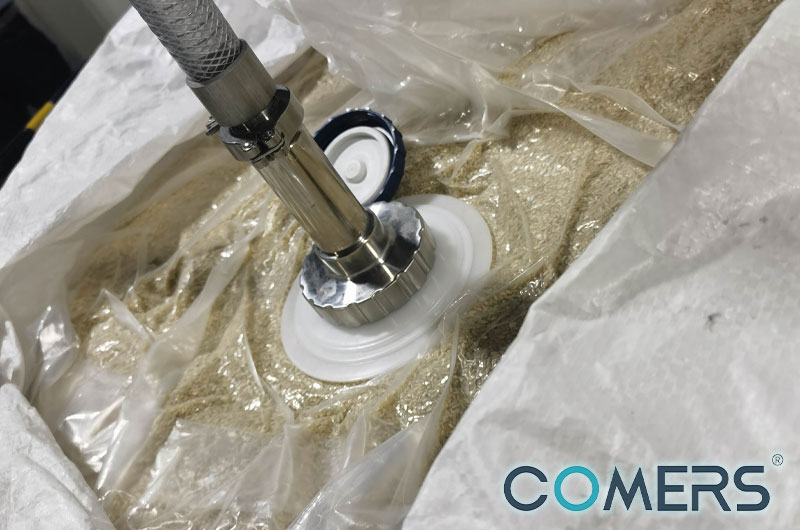
Intertram®FIBC Liners
+ Permanent anti-static / temporary anti-static
+ High barrier performance
+ Single material
+ Prevent from moisture, oxygen(low WVTR<3.0,OTR<1.0)
+ Various film types and thicknesses (Length:1M1-2M2 Thinkness:30-160um)
+ For milk powder/ coffee powder
+ Effective barrier and product protection
+ Strict quality control and safety standards
+ Highly customizable solutions
+ Durable and puncture-resistant
-
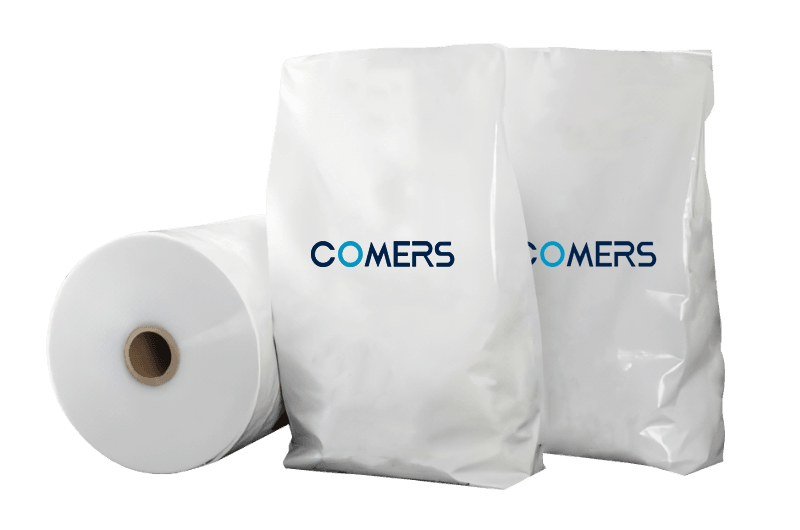
Intertram®FFS Liners
+ high barrier performance
+ prevent from moisture, oxygen(low WVTR<3.0,OTR<1.0)
+ various film types and thicknesses (Length:1M1-2M2 Thinkness:30-160um)
+ can replace Al material
+ High standard in food safety
+ Anti-static film (ATEX prevention)
+ Strict control over contaminants (BPA, Sakazaki-bacillus, etc.)
+ Tailored to customer needs
+ Enhanced product shelf life (approx. 6 months)
-

Washna ® Easy-peel films
+ prevent from moisture, oxygen(low WVTR<3.0,OTR<1.0)
+ various film types and thicknesses (Thickness:45 - 90um)
+ Clean & Safe Delamination
+ smooth sealing layer without wire drawing
+ Optimal Peel Performance
+ Good control level of black dot crystal point, in line with GB/T28117
+ Food contact safety
+ High durability
+ Superior barrier properties
+ Child-friendly opening
+ Clean, residue-free peel -
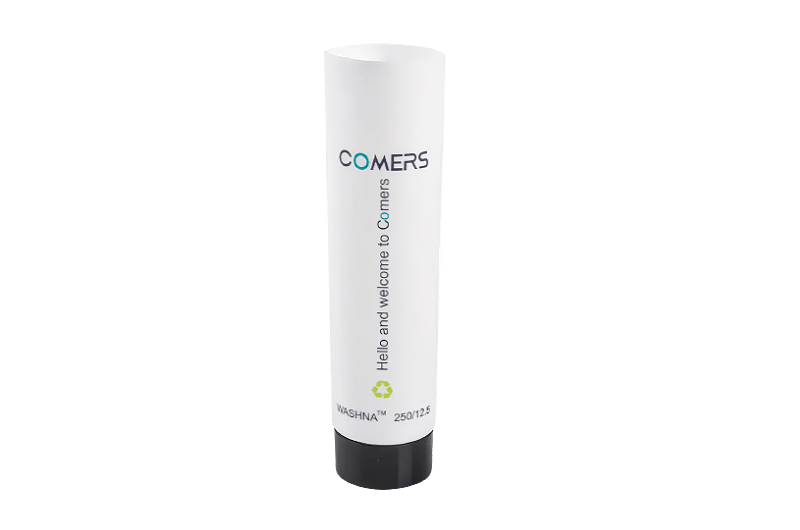
Washna® toothpaste films
+ Suitable for products in paste form
+ High stiffness and good mechanical properties
+ APR approval, Blow-molded in a single blow-molding
+ EVOH≤5%, in line with CEFLEX
+ white/transparent/ultra-white variants (customizable whiteness)
+ Precise thickness control (175−350μm±3%)
+ Excellent puncture resistance
+ Speckle-free surfaces (GB/T 28117 compliant)
+ Reduces environmental impact -

Washna® Laminate films
+ Operates with high-volume film
+ ultimate cost control
+ Good level of crystal point and black point control
+ Customizable with thickness and EVOH ratio
+ Easy-open End (EOE) functionality
+ Preserves freshness and extends shelf life
+ Odor-neutral composition
-
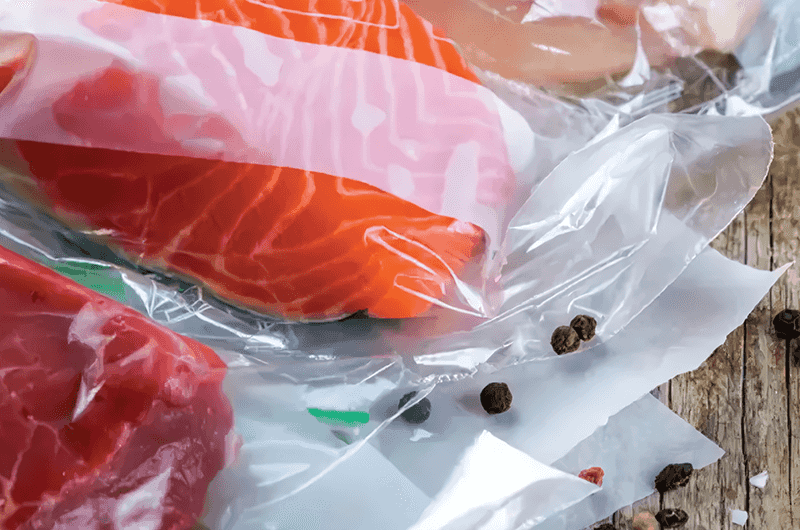
Agometa ® Frozen Vacuum Packaging Bags/Films
+ Excellent transparency
+ Good barrier against water vapor and oxygen
+ Heat sealing performance
+ Adds ultra-high barrier properties
+ high-end food market
+ stable performance, flexible and versatile
+ Good puncture resistance
Jiangsu Comers Neo Materials Co., Ltd.
No.161 Cailing Road, Linhu Town, Wuzhong District, Suzhou City, Jiangsu Province, China.
+86-0512-66558319
E-mail: [email protected]
