

 English
 中文简体
中文简体ATEX Compliant Packaging: Anti-Static High-Barrier Liners Guide
Content
- 1 What “ATEX compliant packaging” means for bulk powders and films
- 2 Electrostatic control: the core of ATEX compliant packaging
- 3 Barrier performance that protects product quality and reduces incident triggers
- 4 Mechanical integrity: puncture resistance is an ATEX control, not just logistics
- 5 Qualification, verification, and documentation for audits and OEM approval
- 6 A procurement-ready specification template (and where Intertram® fits)
What “ATEX compliant packaging” means for bulk powders and films
When buyers search for ATEX compliant packaging, they are typically trying to reduce ignition risk in a potentially explosive atmosphere (most often dust) while also keeping product quality stable during storage and transport. In practice, “ATEX compliant packaging” is not a single certificate for a bag; it is a packaging system that supports the site’s explosion-risk controls and does not introduce avoidable ignition sources during filling, sealing, handling, and discharge.
For powder products such as lithium battery cathode/anode materials (e.g., LCO, LFP, graphite), specialty chemicals, and fine food ingredients, the highest-risk moments usually occur at high-energy handling points: product drop into the liner, film unwinding on FFS lines, liner inflation, and operator contact during closing. These are exactly the operations where electrostatic charging and dust dispersion can overlap.
A practical definition you can use internally
A packaging configuration is “ATEX compliant” at the user level when it:
- Matches the facility’s explosive-atmosphere risk assessment (dust/gas zoning, housekeeping level, ignition sources, and grounding/ionization strategy).
- Controls electrostatic charge generation and discharge likelihood through film selection (anti-static behavior where needed) and documented operating practices.
- Maintains mechanical integrity so punctures, pinholes, and seal defects do not create dust release, oxygen/moisture ingress, or contamination pathways.
- Is supported by verification data (COA/traceability, relevant electrical and barrier tests, and process acceptance criteria).
This definition helps procurement, EHS, and production align on what must be specified and what must be controlled on the line.
Electrostatic control: the core of ATEX compliant packaging
In many powder applications, electrostatic discharge (ESD) is the most frequent ignition concern tied directly to packaging films. Plastics can charge through friction and separation (tribocharging) during unwinding, forming, filling, and product movement along film surfaces. If the charge is not dissipated in a controlled way, it can lead to sparks or brush discharges under the wrong conditions.
Anti-static film is not a marketing label; it must be specified
For buyers, the key is to translate “anti-static” into measurable targets and operating boundaries. Many packaging lines use surface resistivity bands to define whether a film behaves as conductive, dissipative, or insulative. For example, dissipative behavior is commonly used to reduce cling and ESD events without turning the film into a strongly conductive component that requires special grounding architecture.
Because performance can change with humidity, temperature, film aging, and surface contamination, verification should be part of goods-in and periodic in-process checks, not a one-time qualification.
| What you’re controlling | Why it matters in ATEX contexts | What to specify to suppliers | Operational verification example |
|---|---|---|---|
| Charge build-up on film | Reduces probability of energetic discharges during fill/seal/handling | Target resistivity band for the relevant film side(s) | Resistivity measurement by roll/lot + low-humidity conditioning checks |
| Dust attraction to seal area | Dust in seals increases leaks, releases fines, and raises housekeeping burden | Anti-static performance plus COF suited to your forming and dosing method | Seal defect rate and leak checks under “dusty” production conditions |
| Consistency over time | ATEX controls must be reliable across seasons, storage, and throughput changes | Anti-static mechanism (additive vs coating), stabilization expectations, and shelf-life | Trend data: stoppages/1,000 bags, bag-opening failures, operator static complaints |
Design note: anti-static is system-level, not film-only
Even the right film can underperform if equipment grounding is inconsistent, ionizers are poorly placed, humidity drops seasonally, or abrasion points generate new charge. For ATEX compliant packaging projects, we recommend qualifying the film and the line together—define acceptance metrics before trials and capture “before vs after” on the same SKU, speed, and environment.
Barrier performance that protects product quality and reduces incident triggers
ATEX compliant packaging is often discussed only as an ESD topic, but barrier performance is frequently the silent driver of real-world rejects and operational risk. Moisture uptake and oxidation can degrade powders, increase fines, change flow behavior, and create additional dust during discharge—conditions that make dust control harder and housekeeping more demanding.
Specify WVTR and OTR with decision-level clarity
For moisture- and oxygen-sensitive materials, barrier requirements should be expressed as WVTR (water vapor transmission rate) and OTR (oxygen transmission rate), with the supplier’s stated test conditions. As an example of a performance target used in high-barrier industrial liners, Intertram® liner structures are specified with WVTR < 3.0 and OTR < 1.0 in the published product performance notes, supporting protection against humidity and oxidation for sensitive powders.
A practical way to avoid under- or over-specification is to run a mass-balance estimate: multiply the film’s WVTR (under stated conditions) by exposed surface area and storage time, then compare the estimated moisture pickup to your product’s allowable limit. This approach converts “high barrier” from a subjective phrase into a defendable engineering requirement.
Material stack flexibility matters for balancing barrier, strength, and recyclability goals
Many buyers now ask for a barrier solution that can reduce reliance on foil or aluminum layers while keeping performance stable. Multi-layer structures that allow the nylon and EVOH ratio to be adjusted are useful here: nylon contributes toughness and puncture resistance, while EVOH typically improves oxygen barrier. This kind of tunability helps match the liner to the product’s actual sensitivity and the logistics profile (duration, climate exposure, and handling intensity).
Mechanical integrity: puncture resistance is an ATEX control, not just logistics
A puncture or pinhole is more than a quality problem. In powder handling, it can become an EHS issue: leaks create dusting, dusting increases the chance of explosive-atmosphere formation, and rework increases handling events where static can be generated again. From an ATEX compliant packaging perspective, mechanical robustness reduces the probability of loss-of-containment events that cascade into higher-risk conditions.
What to specify for puncture resistance (without overcomplicating it)
Instead of asking for “strong film,” specify the failure modes you must prevent:
- Forklift and pallet-edge punctures during warehousing and loading.
- Abrasive wear from powder granularity and internal rubbing during vibration transport.
- Seal-area defects caused by dust attraction and contamination at the jaw interface.
Film gauge is only one lever, but it is a simple and effective one. Industrial liner films commonly run across a wide band; Intertram® liner configurations are published with 30–160 μm thickness options, allowing the package to be tuned to the handling profile rather than selecting a single “one-size” gauge.
A data point buyers understand: breakage rate over volume
If you want a simple but persuasive KPI for internal approval, use a breakage or damage rate normalized to shipment count. In high-sensitivity battery-material packaging, even small leak rates can be expensive due to contamination controls and requalification steps. Published performance notes for Intertram® report 0 breakages per 10,000 packages in verified use, which is the type of operational metric that directly supports cost reduction and process stability when the line and handling controls are aligned.
Qualification, verification, and documentation for audits and OEM approval
Customers in batteries, chemicals, and regulated food supply chains increasingly require not only “good packaging,” but evidence that the packaging is controlled, traceable, and consistent. For ATEX compliant packaging, this evidence also helps demonstrate that packaging choices support the site’s ignition-risk controls rather than undermining them.
What to request from a film/liner supplier
- COA/COC with roll/lot traceability and declared structure (layers and key resins).
- Barrier data: WVTR and OTR with stated test conditions and tolerances.
- Electrical performance data for the specified film side(s), plus guidance on humidity sensitivity and storage effects.
- Mechanical test results relevant to your risk profile (puncture, dart impact, tear, seal strength where applicable).
- Contaminant controls appropriate to your sector (e.g., declarations for food contact or defined contaminant screening for high-purity powders).
Operational verification that prevents “good film, bad results”
When qualifying ATEX compliant packaging on an FFS or liner-in-FIBC operation, the most effective approach is to combine lab testing with line metrics:
- Define acceptance metrics before trials (seal defect rate, leak checks, stoppages per shift, dust at seal area, bag opening reliability).
- Run trials at worst-case conditions (low humidity, target throughput, typical dust load) rather than only under ideal settings.
- Verify anti-static performance at goods-in and during production to catch drift and handling contamination effects.
- Lock down work instructions for closure, grounding/ionization checks, and damage prevention during forklift handling.
From a supplier perspective, manufacturing controls also matter. For example, Comers states it operates advanced multi-layer film production lines and cleanroom manufacturing capacity with integrated extrusion-to-finished operations and rigorous quality systems—capabilities that align with what OEMs typically request when packaging is a critical component of their risk and quality management.
A procurement-ready specification template (and where Intertram® fits)
Below is a concise template you can adapt for RFQs. It focuses on the items that most directly affect ATEX compliant packaging outcomes and reduces back-and-forth during qualification.
ATEX compliant packaging RFQ checklist for liners and FFS film
- Application and process: product name/form (powder/granule), fill weight, fill method, FFS speed or liner insertion method, expected storage duration, and climate exposure.
- Electrostatic requirement: anti-static behavior needed (yes/no), required performance band for the film side(s), and verification method at goods-in.
- Barrier requirement: WVTR/OTR targets with test conditions; state whether moisture, oxygen, or both are critical.
- Structure and gauge: thickness range, layer structure preferences, and whether nylon/EVOH ratios must be tunable for optimization.
- Mechanical integrity: puncture/impact expectations tied to your handling lanes (forklift, pallet edges, vibration transport).
- Format and dimensions: reel-based FFS film, flat tubular, or side-gusseted tubular; specify width, length, and closure requirements.
- Compliance and cleanliness: declarations for your market (battery materials, food, etc.) and contaminant control requirements.
How Intertram® liners are commonly applied in ATEX-focused powder packaging
For customers packaging moisture- and oxygen-sensitive powders—especially lithium battery electrode materials—Intertram® liners are designed as a high-barrier solution with anti-static options to reduce static-related risks during handling. The product line is offered as FFS film on a reel and as flat or side-gusseted tubular film, supporting different filling and bag-making configurations. In addition, published performance targets include WVTR < 3.0 and OTR < 1.0, with thickness options spanning 30–160 μm to match mechanical risk profiles.
If your goal is to stabilize both safety performance (static control and reduced dust leakage) and quality performance (barrier protection and contamination control), you can review the product formats and application notes here: Intertram® FIBC Liners & FFS Liners.
For teams that need deeper, line-level guidance, these internal technical references can support qualification planning without turning the project into a lengthy troubleshooting cycle: Anti-Static FFS Film: Specs, Selection, and Troubleshooting and Moisture Barrier FIBC Liner Guide: Specs, Materials, QC.
Bottom line: the most reliable ATEX compliant packaging outcomes come from specifying measurable anti-static performance, matching barrier to true product sensitivity, and preventing damage-related dust release through puncture-resistant structures and disciplined handling controls.
-
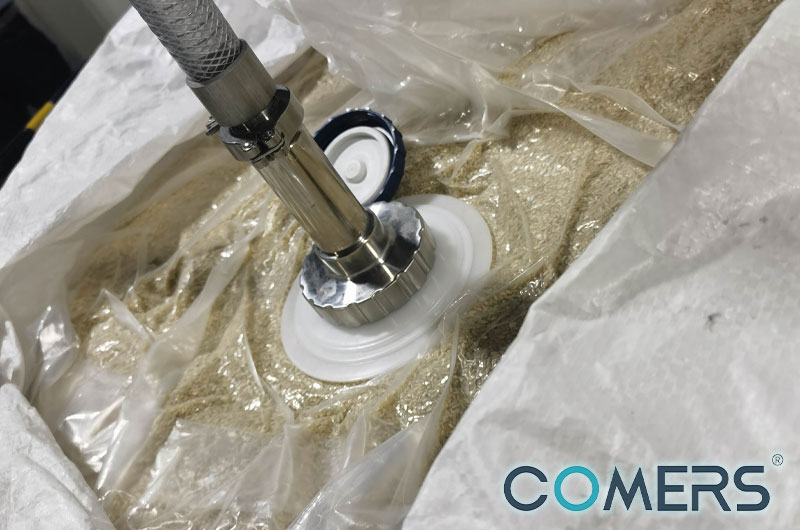
Intertram®FIBC Liners
+ Permanent anti-static / temporary anti-static
+ High barrier performance
+ Single material
+ Prevent from moisture, oxygen(low WVTR<3.0,OTR<1.0)
+ Various film types and thicknesses (Length:1M1-2M2 Thinkness:30-160um)
+ For milk powder/ coffee powder
+ Effective barrier and product protection
+ Strict quality control and safety standards
+ Highly customizable solutions
+ Durable and puncture-resistant
-
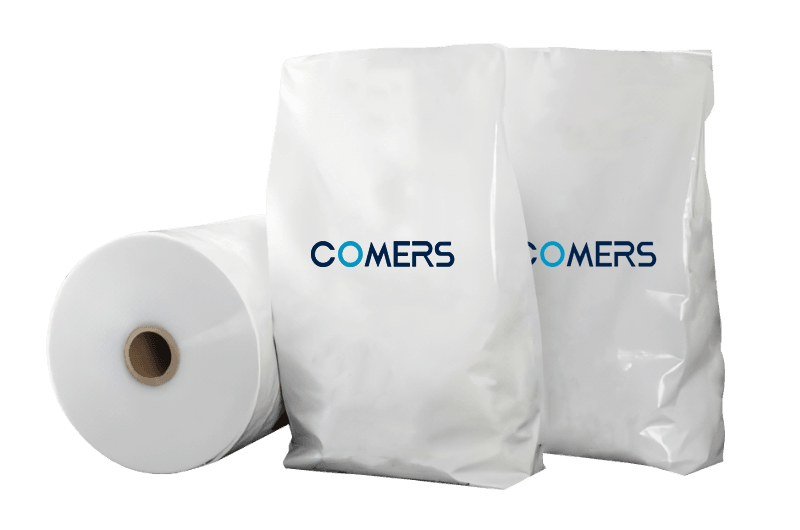
Intertram®FFS Liners
+ high barrier performance
+ prevent from moisture, oxygen(low WVTR<3.0,OTR<1.0)
+ various film types and thicknesses (Length:1M1-2M2 Thinkness:30-160um)
+ can replace Al material
+ High standard in food safety
+ Anti-static film (ATEX prevention)
+ Strict control over contaminants (BPA, Sakazaki-bacillus, etc.)
+ Tailored to customer needs
+ Enhanced product shelf life (approx. 6 months)
-

Washna ® Easy-peel films
+ prevent from moisture, oxygen(low WVTR<3.0,OTR<1.0)
+ various film types and thicknesses (Thickness:45 - 90um)
+ Clean & Safe Delamination
+ smooth sealing layer without wire drawing
+ Optimal Peel Performance
+ Good control level of black dot crystal point, in line with GB/T28117
+ Food contact safety
+ High durability
+ Superior barrier properties
+ Child-friendly opening
+ Clean, residue-free peel -
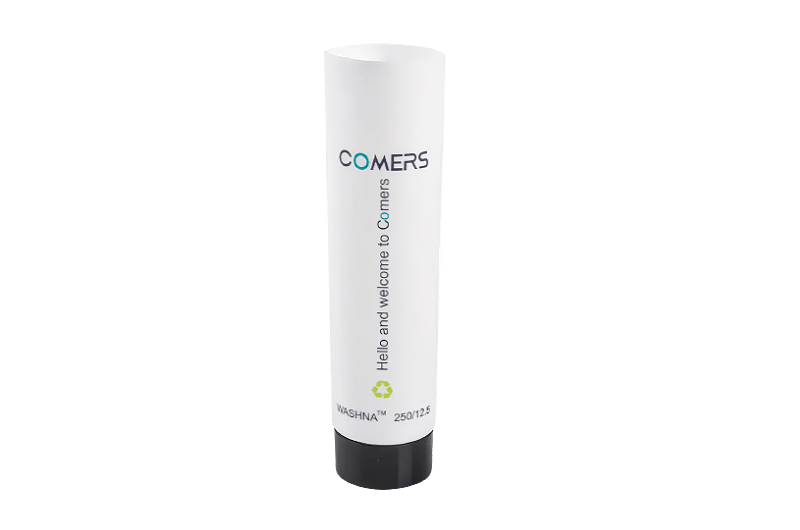
Washna® toothpaste films
+ Suitable for products in paste form
+ High stiffness and good mechanical properties
+ APR approval, Blow-molded in a single blow-molding
+ EVOH≤5%, in line with CEFLEX
+ white/transparent/ultra-white variants (customizable whiteness)
+ Precise thickness control (175−350μm±3%)
+ Excellent puncture resistance
+ Speckle-free surfaces (GB/T 28117 compliant)
+ Reduces environmental impact -
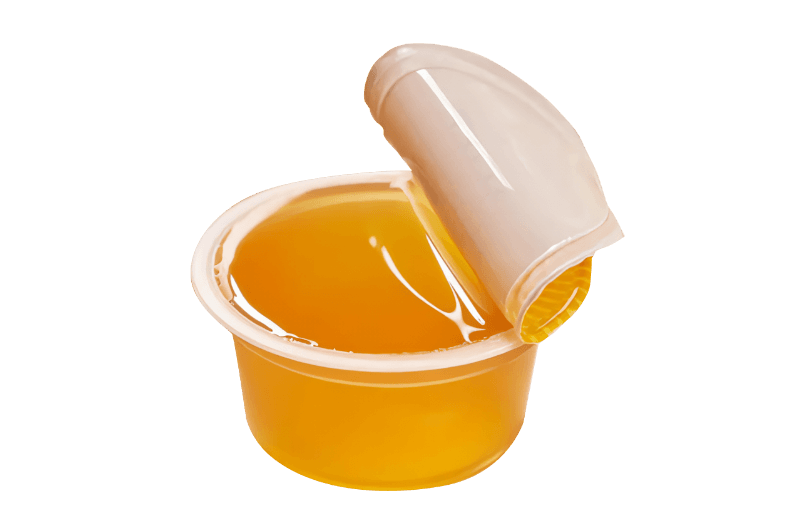
Washna® Laminate films
+ Operates with high-volume film
+ ultimate cost control
+ Good level of crystal point and black point control
+ Customizable with thickness and EVOH ratio
+ Easy-open End (EOE) functionality
+ Preserves freshness and extends shelf life
+ Odor-neutral composition
-
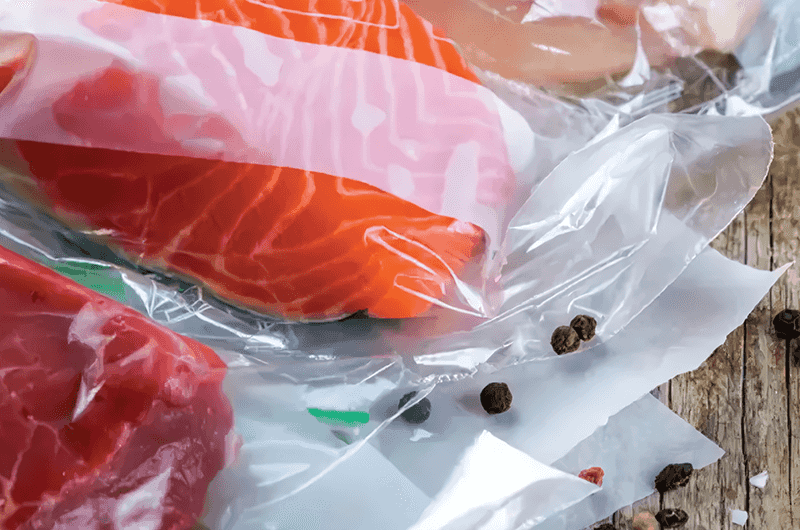
Agometa ® Frozen Vacuum Packaging Bags/Films
+ Excellent transparency
+ Good barrier against water vapor and oxygen
+ Heat sealing performance
+ Adds ultra-high barrier properties
+ high-end food market
+ stable performance, flexible and versatile
+ Good puncture resistance
Jiangsu Comers Neo Materials Co., Ltd.
No.161 Cailing Road, Linhu Town, Wuzhong District, Suzhou City, Jiangsu Province, China.
+86-0512-66558319
E-mail: [email protected]
