

 English
 中文简体
中文简体Anti-Static FFS Film: Specs, Selection, and Troubleshooting
Content
- 1 What Anti-Static FFS Film Is and When to Use It
- 2 How Anti-Static Performance Is Achieved in FFS Structures
- 3 Key Specs That Define a Good Anti-Static FFS Film
- 4 How to Select Anti-Static FFS Film for Real Production Constraints
- 5 Verification and Testing: Proving the Film Is Actually Anti-Static
- 6 Troubleshooting Static Issues on FFS Lines
- 7 Application Examples Where Anti-Static FFS Film Adds Measurable Value
What Anti-Static FFS Film Is and When to Use It
Anti-static FFS film is a form-fill-seal packaging film engineered to reduce electrostatic charge buildup during unwinding, forming, sealing, and product drop. It is commonly used where static causes operational disruptions (film clinging, poor bag opening, misfeeds) or where electrostatic discharge (ESD) poses a product risk (electronics, sensitive powders, cleanroom items).
In practice, anti-static performance matters most when lines run fast, humidity is low, or the packaged product is lightweight and prone to cling. If your FFS line shows frequent “sticking” or intermittent registration issues tied to static, anti-static film is often a higher-leverage fix than mechanical adjustments alone.
Typical operational signals
- Film web clings to rollers, forming collars, or the product chute, especially after roll changes.
- Bags fail to open reliably, causing misfills or product spillage.
- Dusting or fines adhere to the seal area, increasing seal defects or leaks.
- Intermittent static “zaps” during handling, or unexplained sensor noise on the packaging line.
How Anti-Static Performance Is Achieved in FFS Structures
Anti-static FFS film typically relies on additives or coatings that help dissipate charge by creating a controlled, slightly conductive pathway across the film surface. The goal is not “conductive” film (which can create other risks), but a stable charge bleed-off rate that reduces cling and ESD events.
Internal (migratory) anti-static additives
Internal additives are compounded into the polymer and migrate to the surface over time. They are cost-effective and common for commodity packaging, but performance can vary with temperature, film aging, and humidity. Where consistency is critical, ask your supplier about the additive system and its expected stabilization time after extrusion.
Top-coats or surface treatments
Coatings can offer more uniform anti-static properties and faster “ready-to-run” performance, but may require validation for rub resistance, seal-area compatibility, and regulatory compliance (e.g., food contact). Coated films can also be more sensitive to abrasion from guides and forming sets if not specified correctly.
Key takeaway: choose the anti-static approach based on your risk profile—line stability and ESD sensitivity usually justify tighter specifications and stronger verification methods.
Key Specs That Define a Good Anti-Static FFS Film
For most FFS operations, anti-static performance should be specified using measurable electrical and packaging metrics rather than generic descriptions like “anti-static grade.” Common specifications include surface resistivity, static decay behavior, coefficient of friction (COF), haze/gloss, seal initiation temperature (SIT), and hot-tack performance.
| Material behavior | Surface resistivity (Ω/sq) | What it means on an FFS line | Best-fit use cases |
|---|---|---|---|
| Conductive | < 1×10⁵ | Very fast charge dissipation; may require grounding strategy | High-ESD risk environments (specialty, validated) |
| Static dissipative | 1×10⁵ to 1×10¹¹ | Controlled bleed-off that reduces cling and ESD events | Most anti-static FFS film applications |
| Insulative | > 1×10¹¹ | Charge persists; higher cling and attraction to dust/fines | General packaging, not anti-static-critical |
Practical target ranges for many lines
- Surface resistivity commonly targeted for anti-static packaging: ~1×10⁹ to 1×10¹² Ω/sq (confirm by product risk and environment).
- COF should be matched to your forming set and dosing method to prevent both slip-related tracking issues and cling-related feeding problems.
- Seal metrics (SIT and hot-tack) must remain in-spec; anti-static systems should not compromise seal integrity under your line speeds.
How to Select Anti-Static FFS Film for Real Production Constraints
Selection should start with the failure mode you are preventing: operational static (clinging, dust attraction, bag opening failures) or product-risk static (ESD sensitivity). Once that is clear, translate it into measurable requirements and run a controlled trial with defined acceptance criteria.
Selection checklist that avoids costly re-trials
- Define the environment range: typical and worst-case humidity, line speed, and roll storage conditions.
- Set electrical targets (e.g., resistivity band) and confirm which side of the web is anti-static (product side, outside, or both).
- Validate machinability: tracking, registration stability, forming quality, and cut consistency at production speed.
- Verify sealing window: SIT, hot-tack, and seal strength across temperature drift and jaw wear.
- Confirm compatibility: inks, lacquers, coatings, and product contact requirements (food/pharma/cleanroom as applicable).
Operational example: if your FFS line struggles with bag opening and fines contamination in the seal area, prioritize a dissipative resistivity band plus a COF tuned for consistent web handling, then validate seal integrity under “dusty” conditions rather than ideal lab setups.
Verification and Testing: Proving the Film Is Actually Anti-Static
Anti-static claims should be verified at goods-in and periodically during production. The two most actionable approaches are (1) resistivity testing and (2) functional confirmation tied to your line’s pain points (bag opening, dust attraction, stoppage frequency).
A practical QA approach
- Measure surface resistivity on the intended side(s) of the film and record results by roll and lot.
- Test after conditioning at low humidity if static issues occur seasonally; anti-static performance can be humidity-dependent.
- Track production KPIs: stoppages per shift, bag-open failures per 1,000 bags, seal defect rate, and dust/fines contamination incidents.
Data to capture during trials: document the “before vs after” using the same SKU, line speed, and environmental conditions. Even a simple comparison such as “bag-open failures per 1,000 bags” is persuasive when it is collected consistently.
Troubleshooting Static Issues on FFS Lines
If static persists after switching to anti-static FFS film, the root cause is often a mismatch between film capability and the line environment, or an installation factor that prevents charge bleed-off (poor grounding, improper ionization placement, excessive abrasion).
Common causes and corrective actions
- Low humidity: add humidity control or verify film performance under low-RH conditioning; consider a stronger dissipative target band if validated for your product.
- Ionizer misplacement: position ionization to neutralize charge where it is generated (often near unwind and before forming) and ensure emitters are clean and functioning.
- Grounding gaps: confirm effective grounding of key metal components; static control is system-level, not film-only.
- Excessive abrasion: worn rollers, dirty guides, or rough forming sets can increase charge generation; maintenance can materially improve outcomes.
- Seal-area contamination: if fines are pulled into the seal zone, reduce static and also address product drop, dust extraction, and seal jaw cleanliness.
Conclusion: the most reliable results come from aligning film electrical targets with grounded equipment, appropriate ionization, and a validated sealing window.
Application Examples Where Anti-Static FFS Film Adds Measurable Value
Anti-static FFS film is most defensible when the application benefits can be tied to measurable yield or risk reduction. Below are scenarios where anti-static characteristics commonly translate into operational or quality gains.
Electronics and ESD-sensitive components
For electronics packaging, dissipative behavior reduces the likelihood of charge accumulation on the bag surface. Specify electrical targets, verify performance on both film sides if needed, and ensure the packaging system supports ESD controls (grounding and handling procedures).
Powders, granules, and dusty products
Static attracts fines to the seal area, increasing leaks and rework. Anti-static FFS film can reduce dust adhesion, but results improve further when paired with dust management (extraction, product drop control, and seal-jaw cleaning routines).
High-speed snack and lightweight item packaging
In fast vertical FFS operations, static can disrupt bag forming and opening. A properly specified anti-static film often reduces micro-stoppages and improves consistency at target throughput.
- Define success metrics before trials (stoppages, seal defects, bag-open failures).
- Control variables during evaluation (same SKU, same forming set, same line speed).
- Document improvements in a simple scorecard to support purchasing decisions and future troubleshooting.
-
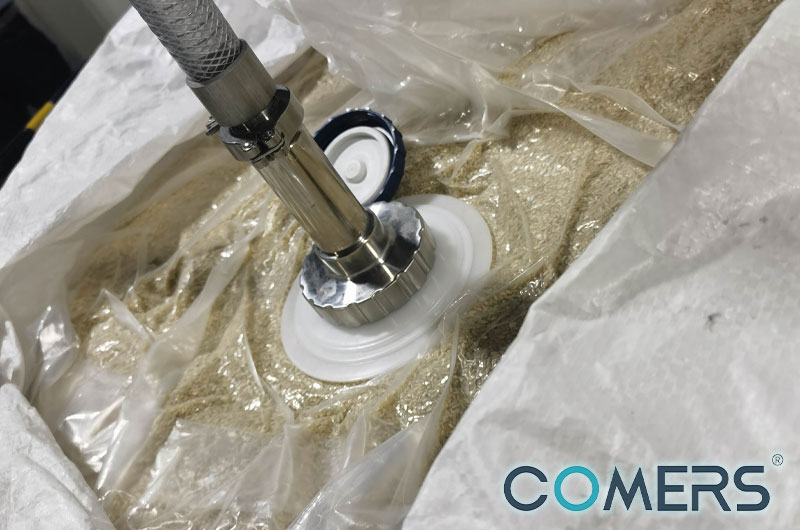
Intertram®FIBC Liners
+ Permanent anti-static / temporary anti-static
+ High barrier performance
+ Single material
+ Prevent from moisture, oxygen(low WVTR<3.0,OTR<1.0)
+ Various film types and thicknesses (Length:1M1-2M2 Thinkness:30-160um)
+ For milk powder/ coffee powder
+ Effective barrier and product protection
+ Strict quality control and safety standards
+ Highly customizable solutions
+ Durable and puncture-resistant
-

Intertram®FFS Liners
+ high barrier performance
+ prevent from moisture, oxygen(low WVTR<3.0,OTR<1.0)
+ various film types and thicknesses (Length:1M1-2M2 Thinkness:30-160um)
+ can replace Al material
+ High standard in food safety
+ Anti-static film (ATEX prevention)
+ Strict control over contaminants (BPA, Sakazaki-bacillus, etc.)
+ Tailored to customer needs
+ Enhanced product shelf life (approx. 6 months)
-

Washna ® Easy-peel films
+ prevent from moisture, oxygen(low WVTR<3.0,OTR<1.0)
+ various film types and thicknesses (Thickness:45 - 90um)
+ Clean & Safe Delamination
+ smooth sealing layer without wire drawing
+ Optimal Peel Performance
+ Good control level of black dot crystal point, in line with GB/T28117
+ Food contact safety
+ High durability
+ Superior barrier properties
+ Child-friendly opening
+ Clean, residue-free peel -
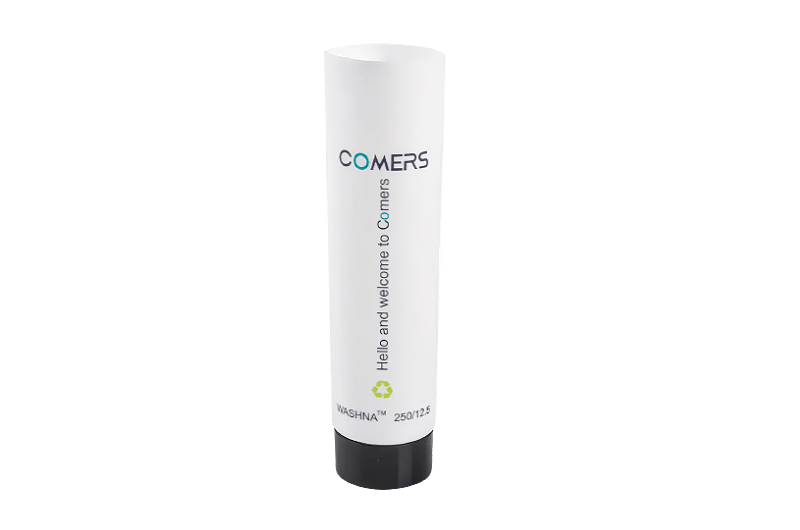
Washna® toothpaste films
+ Suitable for products in paste form
+ High stiffness and good mechanical properties
+ APR approval, Blow-molded in a single blow-molding
+ EVOH≤5%, in line with CEFLEX
+ white/transparent/ultra-white variants (customizable whiteness)
+ Precise thickness control (175−350μm±3%)
+ Excellent puncture resistance
+ Speckle-free surfaces (GB/T 28117 compliant)
+ Reduces environmental impact -

Washna® Laminate films
+ Operates with high-volume film
+ ultimate cost control
+ Good level of crystal point and black point control
+ Customizable with thickness and EVOH ratio
+ Easy-open End (EOE) functionality
+ Preserves freshness and extends shelf life
+ Odor-neutral composition
-

Agometa ® Frozen Vacuum Packaging Bags/Films
+ Excellent transparency
+ Good barrier against water vapor and oxygen
+ Heat sealing performance
+ Adds ultra-high barrier properties
+ high-end food market
+ stable performance, flexible and versatile
+ Good puncture resistance
Jiangsu Comers Neo Materials Co., Ltd.
No.161 Cailing Road, Linhu Town, Wuzhong District, Suzhou City, Jiangsu Province, China.
+86-0512-66558319
E-mail: [email protected]
