

 English
 中文简体
中文简体Preventing Pinholes in Vacuum Bags: Puncture Resistance and Structure
Content
- 1 The Pinhole That Costs More Than the Bag
- 2 Where Punctures Actually Come From
- 3 How Puncture Resistance Is Actually Measured
- 4 Structural Approaches That Actually Improve Puncture Resistance
- 5 Design and Process Factors Beyond the Film Itself
- 6 Weighing Puncture Resistance Against Other Requirements
- 7 A Practical Starting Checklist
The Pinhole That Costs More Than the Bag
A single pinhole in a vacuum bag rarely shows up on the line. It shows up two days later, when a distributor opens a case and finds a bag that's lost its collapse around a rack of ribs or a shipment of cheese wedges. By then the product has been exposed to oxygen, the shelf-life clock has quietly restarted, and the cause traces back to a sharp bone tip, a jagged product edge, or rough handling during palletizing — not a defect anyone caught in production.
Puncture resistance is one of the few packaging properties that gets tested in the lab under controlled, gentle conditions and then gets abused in the field in ways no coupon test fully replicates. Understanding how pinholes actually form, and which structural choices reduce that risk, matters more than chasing a single puncture-resistance number on a spec sheet.
Where Punctures Actually Come From
Most puncture failures in vacuum-packed products fall into a short list of causes, and each one calls for a different countermeasure.
- Sharp product features. Bone tips on primal cuts, crystalline resin pellets, metal fasteners, and rigid product corners are the most common source. Once the vacuum draws down, atmospheric pressure presses the film directly against these points with far more force than the loose film experienced before sealing.
- Handling and transit abrasion. Pallet edges, forklift contact, and pack-on-pack friction during transport create slow abrasion that thins the film locally until it perforates, distinct from the sudden puncture caused by a sharp product feature.
- Vacuum chamber dynamics. As the chamber draws down, film can collapse unevenly around an irregular product, concentrating stress at fold points rather than distributing it, which is part of why puncture-resistant patches placed in the wrong spot on the bag often fail to protect the actual point of contact.
- Cold and frozen brittleness. Films that perform adequately at room temperature can lose flexibility at freezer temperatures, making them more prone to cracking rather than stretching around a sharp point.
Matching the countermeasure to the actual failure cause is the difference between a fix that works and one that just adds cost. A thicker film helps against abrasion but does little against a bone tip pressed directly into a fold line.
How Puncture Resistance Is Actually Measured
Puncture performance is quantified through standardized slow-rate penetration testing rather than informal poke tests. The most widely referenced method, the ASTM standard for slow rate penetration resistance of flexible barrier films and laminates, drives a probe into a clamped film sample at a controlled rate and records the force, energy, and elongation at the point of failure. That data lets converters compare structures on equal footing and set a defensible acceptance threshold rather than relying on subjective handling impressions.
Two numbers from that test matter more than either one alone. Peak force to break indicates how much concentrated pressure the film resists before a sharp point breaks through, which correlates closely with resistance to a bone tip or product corner. Energy to break, by contrast, reflects how much the film stretches and absorbs impact before failing, which matters more for blunt abrasion and drop-impact scenarios. A film optimized purely for peak force can still underperform in transit if it lacks the elongation to absorb repeated flexing.
Structural Approaches That Actually Improve Puncture Resistance
Puncture resistance is largely a function of film structure and layer selection rather than sheer thickness alone, though thickness still plays a role.
- Nylon (PA) outer layers. Polyamide is prized for puncture resistance because it combines tensile strength with the ability to stretch before tearing, rather than failing abruptly the way a purely rigid layer would. Nylon/polyethylene coextrusions remain a common baseline structure for bone-in meat and other sharp-product applications.
- Multi-ply "rip-stop" constructions. Structures built with more than one polyamide layer maintain a hermetic seal even if the outermost layer is scratched or scuffed, since the inner layer picks up the load rather than the whole structure failing at once. This layered redundancy tends to outperform a single thick layer of the same total gauge.
- Thickness as a targeted lever, not a blanket fix. Thicker gauge genuinely improves resistance to abrasion and blunt puncture, but adding thickness across the whole structure increases cost and can reduce the flexibility needed to conform tightly around irregular products. Localized reinforcement, rather than uniform thickness increases, is usually the more cost-effective route for products with a known puncture point.
- Balancing stiffness with conformability. A structure that's puncture-resistant but too stiff to draw tightly around product contours can create its own risk, since loose film flexes more at fold points and is more prone to the flex-cracking that leads to slow pinhole formation over time.
For teams evaluating whether an existing liner or bag structure is under-specified for its application, a practical walkthrough of selecting, fitting, and installing puncture-resistant liners to prevent flat failures is a useful reference point before committing to a structural change.
Design and Process Factors Beyond the Film Itself
Material selection only solves part of the problem. Bag geometry, product orientation, and process control account for a meaningful share of field failures independent of the film itself.
- Corner and gusset design. Sharp product corners concentrate stress most at the bag's own corners and seal edges. Rounded gussets and slightly oversized bag dimensions relative to the product reduce the tension the film carries at these points once vacuum is drawn.
- Product loading orientation. Where feasible, orienting sharp features away from the seal area and toward the center of the bag reduces the chance that a puncture also compromises seal integrity, which would otherwise turn a small pinhole into a full seal failure.
- Vacuum draw rate and pressure. An aggressive, fast vacuum draw can pull film against sharp points with more sudden force than a controlled draw rate, particularly on chamber machines handling irregular products. Adjusting cycle parameters is often a lower-cost fix than upgrading the film structure.
- Seal-zone protection. Since heat-seal integrity and puncture resistance interact — a puncture near the seal line is far more likely to cause total package failure than one in the body of the bag — reviewing how heat-seal window parameters are optimized for consistent vacuum packaging yield is worth pairing with any puncture-resistance review rather than treating the two as separate problems.
Weighing Puncture Resistance Against Other Requirements
Puncture resistance rarely gets optimized in isolation. Adding polyamide layers or increasing gauge to chase a higher puncture-resistance number can work against barrier performance, machinability on existing sealing equipment, and per-unit cost, so the right specification depends on which failure mode is the actual risk for a given product.
A bone-in primal cut destined for a 45-day chilled shelf life has a very different risk profile than a frozen, boneless product moving through a single distribution leg. For products with genuinely aggressive puncture risk, teams that already stock or evaluate structures such as frozen-format vacuum packaging bags and films built for demanding handling conditions have a reasonable starting point for comparison rather than specifying blind.
A Practical Starting Checklist
Reducing pinhole and puncture-related failures comes down to matching the countermeasure to the actual cause rather than defaulting to a thicker film. A workable process looks like this: identify whether the dominant risk is sharp product features, transit abrasion, or cold-temperature brittleness; test candidate structures under ASTM F1306 conditions and compare both peak force and energy to break, not force alone; consider localized reinforcement or multi-ply rip-stop constructions before increasing overall gauge; review bag geometry and product loading orientation as a lower-cost first fix; and confirm that any puncture-resistance change doesn't quietly compromise seal integrity or barrier performance elsewhere in the structure.
Treated this way, puncture resistance stops being a reactive fix after a customer complaint and becomes a designed-in property, specified against the actual failure mode rather than a generic thickness target.
-
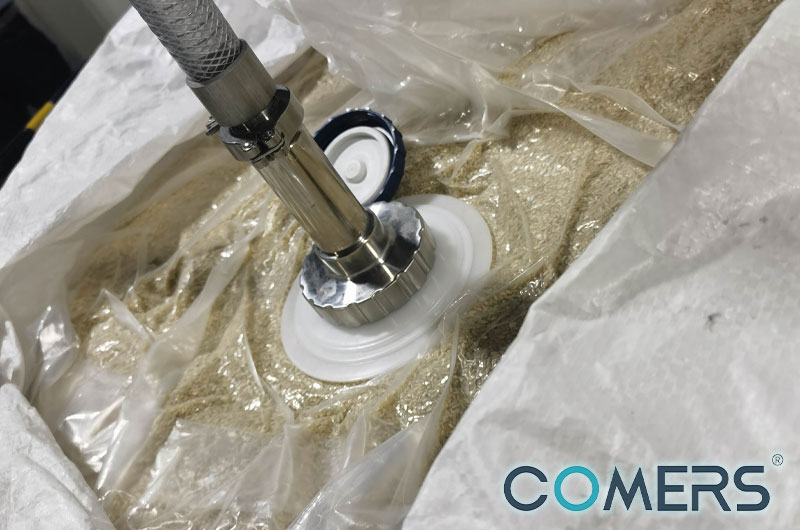
Intertram®FIBC Liners
+ Permanent anti-static / temporary anti-static
+ High barrier performance
+ Single material
+ Prevent from moisture, oxygen(low WVTR<3.0,OTR<1.0)
+ Various film types and thicknesses (Length:1M1-2M2 Thinkness:30-160um)
+ For milk powder/ coffee powder
+ Effective barrier and product protection
+ Strict quality control and safety standards
+ Highly customizable solutions
+ Durable and puncture-resistant
-
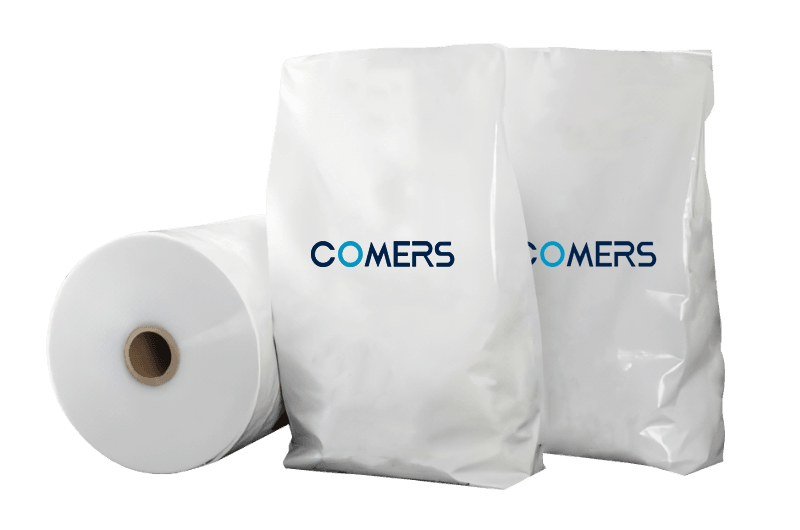
Intertram®FFS Liners
+ high barrier performance
+ prevent from moisture, oxygen(low WVTR<3.0,OTR<1.0)
+ various film types and thicknesses (Length:1M1-2M2 Thinkness:30-160um)
+ can replace Al material
+ High standard in food safety
+ Anti-static film (ATEX prevention)
+ Strict control over contaminants (BPA, Sakazaki-bacillus, etc.)
+ Tailored to customer needs
+ Enhanced product shelf life (approx. 6 months)
-

Washna ® Easy-peel films
+ prevent from moisture, oxygen(low WVTR<3.0,OTR<1.0)
+ various film types and thicknesses (Thickness:45 - 90um)
+ Clean & Safe Delamination
+ smooth sealing layer without wire drawing
+ Optimal Peel Performance
+ Good control level of black dot crystal point, in line with GB/T28117
+ Food contact safety
+ High durability
+ Superior barrier properties
+ Child-friendly opening
+ Clean, residue-free peel -
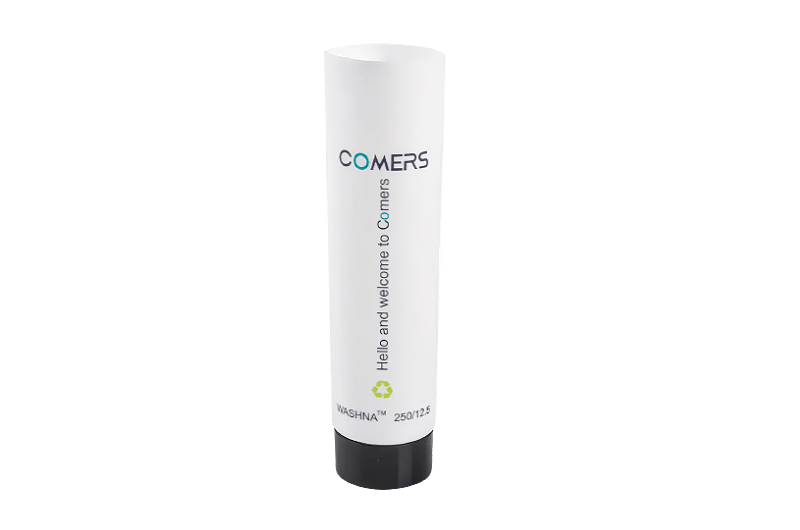
Washna® toothpaste films
+ Suitable for products in paste form
+ High stiffness and good mechanical properties
+ APR approval, Blow-molded in a single blow-molding
+ EVOH≤5%, in line with CEFLEX
+ white/transparent/ultra-white variants (customizable whiteness)
+ Precise thickness control (175−350μm±3%)
+ Excellent puncture resistance
+ Speckle-free surfaces (GB/T 28117 compliant)
+ Reduces environmental impact -
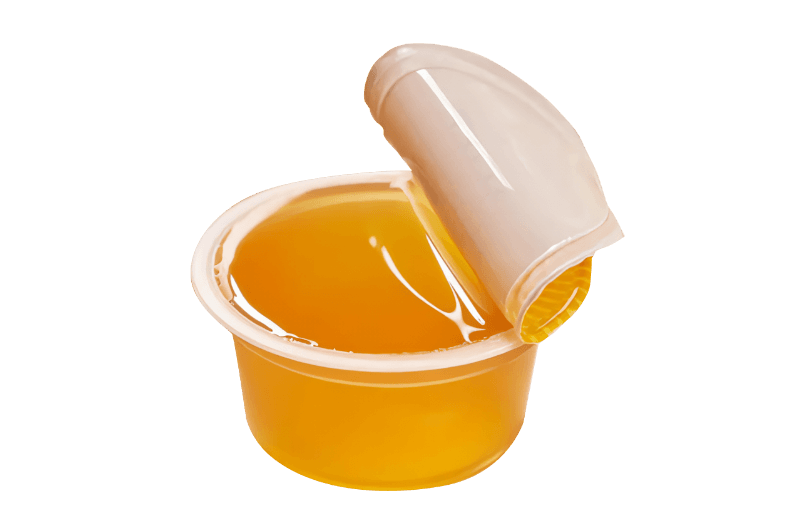
Washna® Laminate films
+ Operates with high-volume film
+ ultimate cost control
+ Good level of crystal point and black point control
+ Customizable with thickness and EVOH ratio
+ Easy-open End (EOE) functionality
+ Preserves freshness and extends shelf life
+ Odor-neutral composition
-
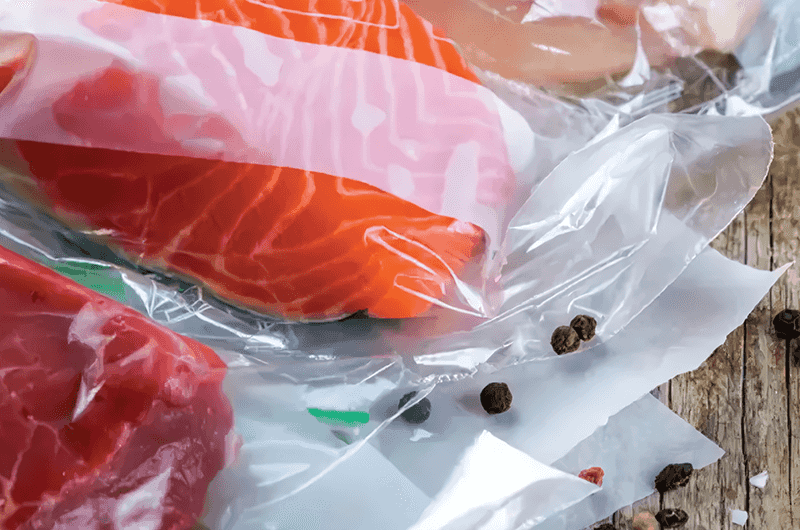
Agometa ® Frozen Vacuum Packaging Bags/Films
+ Excellent transparency
+ Good barrier against water vapor and oxygen
+ Heat sealing performance
+ Adds ultra-high barrier properties
+ high-end food market
+ stable performance, flexible and versatile
+ Good puncture resistance
Jiangsu Comers Neo Materials Co., Ltd.
No.161 Cailing Road, Linhu Town, Wuzhong District, Suzhou City, Jiangsu Province, China.
+86-0512-66558319
E-mail: [email protected]
