

 English
 中文简体
中文简体Easy-Open End Packs: Sealing Strategies for Easy Open Without Leaks
Content
- 1 The Trade-Off Nobody Wants to Admit
- 2 Why Peel Force Alone Is the Wrong Target
- 3 How Easy-Peel Structures Actually Achieve Controlled Opening
- 4 How Peel Performance Is Measured and Specified
- 5 Where Leaks Actually Come From, Even With a Good Film
- 6 Sealing Process Parameters Worth Locking Down
- 7 Getting Both Properties Right at the Same Time
The Trade-Off Nobody Wants to Admit
Ask a packaging engineer to make an end pack easier to open, and the honest answer is that it's rarely free. Every design choice that lowers the force needed to peel a seal open by hand also lowers the margin against the seal opening on its own — during a drop, a pallet compression event, or simple handling in transit. The products that get this wrong end up in one of two uncomfortable places: consumers fighting a seal that won't budge, or seals that fail quietly in the supply chain before the product ever reaches a shelf.
The good news is that easy-open and leak-proof aren't actually opposites. They're two ends of a specification that can be controlled precisely, provided the seal is engineered as a system — film structure, seal process, and pack geometry together — rather than treated as a single "peel strength" number to dial up or down.
Why Peel Force Alone Is the Wrong Target
It's tempting to specify an easy-open seal by a single peel-force number and assume the job is done. In practice, two seals with an identical average peel force can behave completely differently depending on how they fail.
- Cohesive failure occurs within the sealant layer itself, splitting internally rather than separating cleanly at the bond interface. This tends to produce a controlled, predictable peel and is the mechanism most easy-peel structures are engineered to rely on.
- Adhesive failure occurs at the interface between layers, and it's far less predictable — peel force can spike or drop sharply along the seal length, which is what produces the "starts easy, then won't budge" experience consumers complain about.
- Interfacial delamination outside the intended seal zone is the failure mode that actually causes leaks: instead of separating where designed, the seal opens along an unintended path, often triggered by contamination or process drift rather than the film structure itself.
Specifying "seal strength" without specifying failure mode is specifying half the problem. A seal that averages 5 N/15mm through clean cohesive failure is a fundamentally different product than one that averages the same number through erratic adhesive failure.
How Easy-Peel Structures Actually Achieve Controlled Opening
Most reliable easy-open constructions build the controlled-failure behavior directly into a dedicated sealant layer rather than relying on the bulk film or the sealing process alone. Ethylene-octene copolymer (EOE) based sealant layers are a common approach: the polymer is chosen specifically for how it fails under peel stress, giving a stable, repeatable opening force rather than one that drifts with small variations in sealing temperature or dwell time. A well-controlled easy-peel layer typically targets a defined force range — commonly in the low single-digit to low double-digit newtons per 15mm — with the tolerance band itself being as important as the target, since a wide, unpredictable range is what produces both consumer complaints and unexpected in-transit failures.
Surface quality within that sealant layer matters more than it might seem. Microscopic crystalline defects can disrupt the uniform molecular interaction the peel behavior depends on, creating localized weak points that behave unpredictably even when the average peel force looks acceptable on paper. Teams evaluating or specifying an easy-peel structure benefit from reviewing how EOE-based easy-peel film structures are engineered to control opening force and consistency before assuming any "easy-peel" film will behave the same way under real sealing conditions.
How Peel Performance Is Measured and Specified
Peel and seal strength are quantified through standardized testing rather than a subjective hand-feel check. The ASTM standard for seal strength of flexible barrier materials defines the peel configurations, grip alignment, and pull rate needed to get comparable, repeatable results, and — critically — it identifies the mode of specimen failure alongside the force reading. That failure-mode data is exactly what separates a genuinely engineered easy-open seal from one that merely tests acceptable in the lab.
In practice, a useful specification records both average seal strength and maximum seal strength across the width of the seal, since a seal that spikes sharply at one point — even if its average looks fine — is the seal most likely to either resist opening at that point or fail unpredictably elsewhere under handling stress. Testing across the full production width, not just a single strip, catches variation that a narrow sample can miss entirely.
Where Leaks Actually Come From, Even With a Good Film
A properly specified easy-peel film can still leak in production if the sealing process itself introduces defects the film specification never anticipated.
- Contamination at the seal interface. Dust, fines, moisture, or product residue trapped between the sealant surfaces prevents full wetting during the seal cycle, creating discontinuous bond zones that behave as channel leaks rather than clean peel points. This is one of the more common and underdiagnosed causes of intermittent leak complaints, particularly in powder and dry-fill applications.
- Sealing window drift. Small shifts in jaw temperature, dwell time, or pressure move the seal outside the process window the easy-peel structure was designed around, which can turn a controlled cohesive failure into unpredictable adhesive failure without any visible change on the line.
- Jaw surface condition. Buildup, scratches, or worn non-stick tape on the sealing jaws repeat the same defect at the same location on every cycle, which is often mistaken for a material problem when it's actually a maintenance issue.
A structured diagnostic approach — checking for contamination first, since it produces the same symptoms as a marginal seal window — resolves most intermittent leak issues faster than jumping straight to a film change. A more detailed breakdown of how dust and fines create channel leaks in heat seals and the process fixes that resolve them is a useful reference for teams seeing inconsistent seal performance that doesn't correlate cleanly with any single film lot.
Sealing Process Parameters Worth Locking Down
Because easy-peel sealant layers are engineered for a narrower, more sensitive process window than standard permanent seals, tighter control over jaw parameters pays off disproportionately.
- Temperature and dwell time as a matched pair. Easy-peel layers often have a narrower acceptable combination of temperature and dwell than permanent-seal structures, since overheating pushes the seal past its designed cohesive-failure point toward a stronger, less predictable bond.
- Consistent jaw pressure across the seal width. Uneven pressure produces uneven bond strength along the same seal line, which is exactly the spiking peel-force pattern that specification testing is meant to catch before it reaches production.
- Defined acceptance criteria tied to failure mode, not just force. Reviewing how heat-seal windows are set and validated for consistent yield helps translate a lab-tested peel specification into a repeatable production process; a practical approach to optimizing heat-seal window parameters for vacuum packaging yield applies directly to easy-open end packs, where the acceptable window is typically tighter than for standard barrier seals.
Getting Both Properties Right at the Same Time
Easy-open performance and leak resistance stop competing once the seal is treated as a designed system rather than a single tunable number. A workable approach: specify peel force as a range with a defined failure mode, not a single average; validate that range across the full seal width rather than a narrow test strip; rule out contamination before adjusting film structure when leak complaints appear; and keep sealing-process parameters tight enough that the easy-peel layer operates inside the window it was actually engineered for.
Handled this way, an easy-open end pack isn't a compromise between convenience and protection — it's a seal specified precisely enough to deliver both.
-
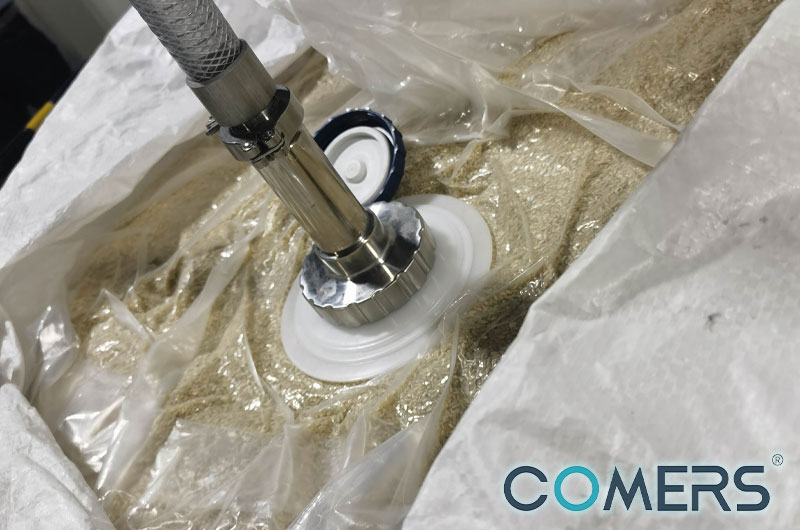
Intertram®FIBC Liners
+ Permanent anti-static / temporary anti-static
+ High barrier performance
+ Single material
+ Prevent from moisture, oxygen(low WVTR<3.0,OTR<1.0)
+ Various film types and thicknesses (Length:1M1-2M2 Thinkness:30-160um)
+ For milk powder/ coffee powder
+ Effective barrier and product protection
+ Strict quality control and safety standards
+ Highly customizable solutions
+ Durable and puncture-resistant
-
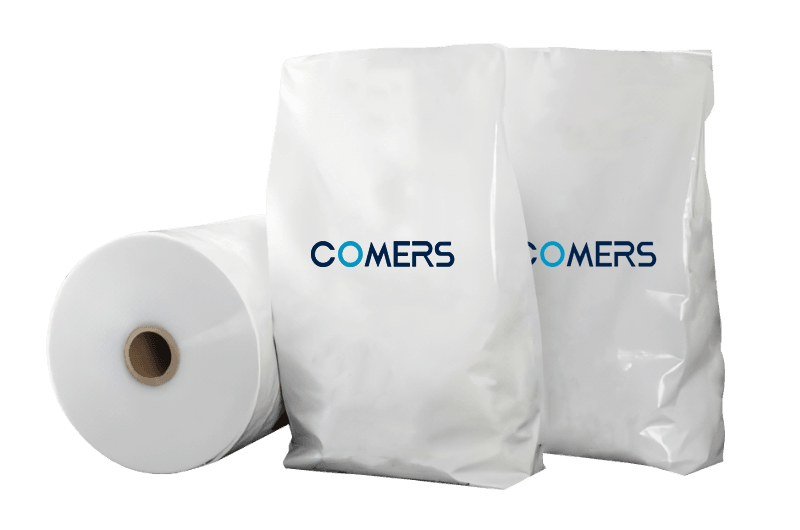
Intertram®FFS Liners
+ high barrier performance
+ prevent from moisture, oxygen(low WVTR<3.0,OTR<1.0)
+ various film types and thicknesses (Length:1M1-2M2 Thinkness:30-160um)
+ can replace Al material
+ High standard in food safety
+ Anti-static film (ATEX prevention)
+ Strict control over contaminants (BPA, Sakazaki-bacillus, etc.)
+ Tailored to customer needs
+ Enhanced product shelf life (approx. 6 months)
-

Washna ® Easy-peel films
+ prevent from moisture, oxygen(low WVTR<3.0,OTR<1.0)
+ various film types and thicknesses (Thickness:45 - 90um)
+ Clean & Safe Delamination
+ smooth sealing layer without wire drawing
+ Optimal Peel Performance
+ Good control level of black dot crystal point, in line with GB/T28117
+ Food contact safety
+ High durability
+ Superior barrier properties
+ Child-friendly opening
+ Clean, residue-free peel -
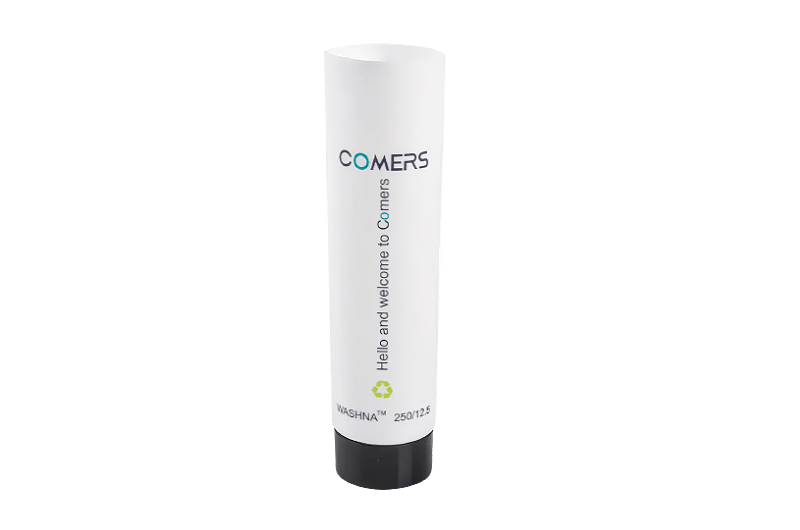
Washna® toothpaste films
+ Suitable for products in paste form
+ High stiffness and good mechanical properties
+ APR approval, Blow-molded in a single blow-molding
+ EVOH≤5%, in line with CEFLEX
+ white/transparent/ultra-white variants (customizable whiteness)
+ Precise thickness control (175−350μm±3%)
+ Excellent puncture resistance
+ Speckle-free surfaces (GB/T 28117 compliant)
+ Reduces environmental impact -
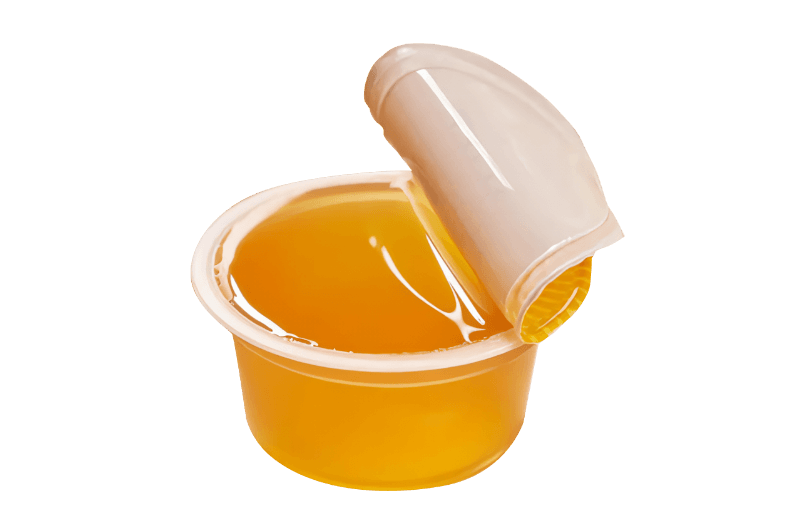
Washna® Laminate films
+ Operates with high-volume film
+ ultimate cost control
+ Good level of crystal point and black point control
+ Customizable with thickness and EVOH ratio
+ Easy-open End (EOE) functionality
+ Preserves freshness and extends shelf life
+ Odor-neutral composition
-
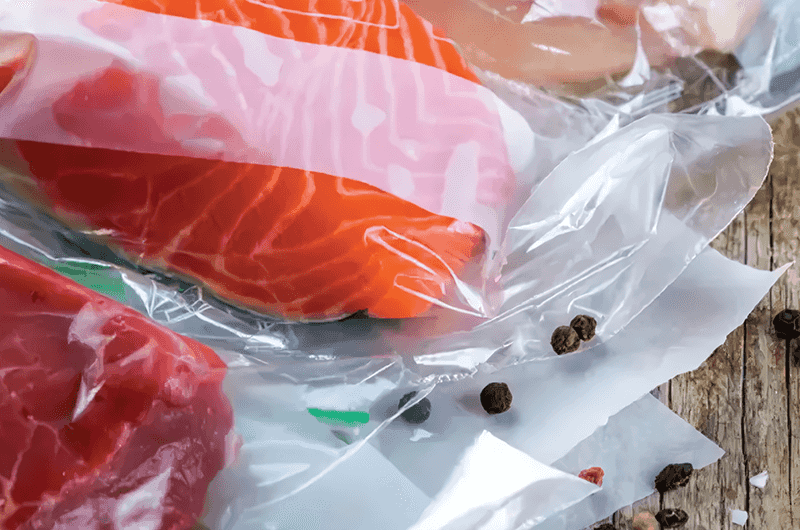
Agometa ® Frozen Vacuum Packaging Bags/Films
+ Excellent transparency
+ Good barrier against water vapor and oxygen
+ Heat sealing performance
+ Adds ultra-high barrier properties
+ high-end food market
+ stable performance, flexible and versatile
+ Good puncture resistance
Jiangsu Comers Neo Materials Co., Ltd.
No.161 Cailing Road, Linhu Town, Wuzhong District, Suzhou City, Jiangsu Province, China.
+86-0512-66558319
E-mail: [email protected]
