

 English
 中文简体
中文简体Why Cosmetic Tubes Burst or Leak: Material Countermeasures
Content
- 1 The Most Common Reasons Cosmetic Tubes Burst or Leak
- 2 How Material Architecture Determines Tube Performance
- 3 Layer Architecture: Why Single-Material Tubes Fall Short for Premium Cosmetics
- 4 The Role of Manufacturing Precision in Preventing Field Failures
- 5 Matching Film Specification to Your Formulation Type
- 6 What to Ask Your Film Supplier Before Specifying a Tube Structure
- 7 Sustainability Compliance Is Now a Structural Requirement, Not an Add-On
Tube failure is one of the most persistent quality complaints we hear from cosmetic and personal care brands. A burst seam at the shoulder, a slow leak around the nozzle, a delamination that causes the tube wall to balloon under pressure — each of these incidents carries real costs: product recalls, damaged brand reputation, and customer trust that takes years to rebuild. After years of manufacturing lamination films for cosmetic tube packaging, we've mapped the root causes of these failures more times than we can count. What follows is a frank breakdown of why tubes fail and what material-level decisions actually prevent it.
The Most Common Reasons Cosmetic Tubes Burst or Leak
Tube failures rarely have a single cause. In practice, they result from the interaction of material choice, processing conditions, and end-use stress. That said, most cases we've analyzed fall into one of four categories:
Inadequate Seal Strength at the Tube Shoulder and Bottom
The shoulder area — where the tube body meets the nozzle — and the bottom fin seal are the two highest-stress zones in any squeezable tube. Industry testing typically requires a minimum heat-seal peel force of 8–12 N/15mm for cosmetic tube laminates. Films that test below this threshold, or that show high variance across a roll, will produce a percentage of weak seals that only reveal themselves under the internal pressure of repeated squeezing. A smooth, wire-draw-free sealing layer is non-negotiable here: any surface irregularity in the inner film layer creates micro-channels that compromise the seal integrity from the start.
Delamination Between Film Layers
Multi-layer laminate tubes depend entirely on the adhesion strength between their co-extruded layers. When tie layers are improperly formulated — or when the EVOH content exceeds the structural balance of the film stack — inter-layer adhesion can fail progressively. We often see this in tubes filled with high-water-activity formulas: moisture diffusion into a poorly specified tie layer softens adhesion over time, causing the outer and inner layers to separate and the tube wall to visibly bubble or crack. Maintaining EVOH content at or below 5% within a balanced multi-layer architecture is a key structural safeguard, and it also aligns with CEFLEX recyclability guidelines.
Insufficient Barrier Against Moisture and Oxygen Ingress
Leaks are not always structural — sometimes the failure is chemical. Cosmetic formulations containing water-soluble actives, emulsions, or volatile fragrance compounds are highly sensitive to moisture vapor and oxygen transmission through the tube wall. A film with a water vapor transmission rate (WVTR) above 3.0 g/m²/day or an oxygen transmission rate (OTR) above 1.0 cm³/m²/day/atm will allow enough permeation over a 12–24 month shelf life to degrade formulation stability, alter viscosity, and — in extreme cases — generate internal gas pressure that stresses the seams. Specifying films with WVTR <3.0 and OTR <1.0 is a baseline requirement for most leave-on and semi-rinse cosmetic products.
Mechanical Stress from Stiffness Mismatch and Thickness Variation
Tubes that are too stiff crack under repeated flexing; tubes that are too soft cannot hold their shape during filling and capping, leading to fold-over sealing defects. For typical cosmetic tube applications, laminate thicknesses in the range of 175–350 μm are common, and thickness uniformity within ±3% across the web width is the industry standard for preventing localized weak points. Films that fall outside this tolerance — especially if crystal point defects (black dots) are present — introduce stress concentrators that initiate cracks exactly where you don't want them.
How Material Architecture Determines Tube Performance
Understanding failure modes is only useful if it leads to better material decisions. The table below summarizes the key performance parameters that cosmetic tube film specifications should address, and the functional role each plays in preventing failure:
| Parameter | Target Specification | Failure Mode Prevented |
|---|---|---|
| WVTR | <3.0 g/m²/day | Moisture-driven formulation degradation and internal pressure buildup |
| OTR | <1.0 cm³/m²/day/atm | Oxidative formulation degradation; active ingredient loss |
| Film thickness uniformity | ±3% tolerance | Stress concentration and localized cracking during flex fatigue |
| EVOH content | ≤5% | Delamination from structural imbalance; recyclability compliance |
| Crystal point defects | Controlled per GB/T28117 | Pinhole formation; seal contamination |
| Sealing layer surface | Smooth, no wire drawing | Micro-channel leaks at heat-seal joints |
What this table cannot fully convey is how these parameters interact. A film that passes individual barrier tests but has high crystal point contamination can still fail in service, because each defect is a potential nucleation point for seal failure or puncture under transit stress. This is why quality-forward manufacturers test to composite performance standards, not just isolated metrics.
Layer Architecture: Why Single-Material Tubes Fall Short for Premium Cosmetics
Simple polyethylene (PE) monolayer tubes remain widely used for commodity personal care products — and for good reason: they are inexpensive, flexible, and easy to seal. However, a monolayer PE tube offers no meaningful oxygen barrier. Its OTR typically exceeds 2,000–4,000 cm³/m²/day/atm, making it entirely unsuitable for formulations containing antioxidant-sensitive actives, natural pigments, or fragrance systems that oxidize over a 12-month shelf life.
The industry's answer has been multi-layer co-extrusion, combining polyolefin outer and inner layers for mechanical performance with a central EVOH oxygen barrier layer and tie layers in between. A well-designed 7-layer or 9-layer co-extruded structure can bring OTR below 1.0 cm³/m²/day/atm while maintaining the stiffness and flex fatigue resistance expected of premium cosmetic packaging. The key engineering challenge is calibrating each layer's contribution without compromising the overall structural balance or recyclability profile of the tube.
It is worth noting that the shift toward mono-material and APR-approved tube structures has added complexity. APR-approved, blow-molded constructions must pass recyclability testing while still delivering barrier performance — which means the EVOH layer must be precisely controlled, and the entire structure must be designed for clean separation in recycling streams. Films certified under CEFLEX guidelines with EVOH ≤5% are increasingly the specification baseline for brands targeting European markets.
The Role of Manufacturing Precision in Preventing Field Failures
Even well-designed film structures fail if manufacturing execution is inconsistent. The variables that matter most in practice:
- Extrusion line stability — temperature and pressure fluctuations during co-extrusion create thickness variation and inter-layer adhesion inconsistencies that do not show up in spot testing but accumulate across production runs.
- Clean-room production discipline — particulate contamination from the manufacturing environment is a primary source of crystal point defects (black dots). Films produced in ISO-8 / Class 100,000 GMP clean rooms have significantly lower defect counts than those manufactured in open-environment lines.
- In-line and off-line quality control — real-time thickness monitoring, barrier testing on production samples, and systematic traceability from raw material to finished roll are the difference between catching a batch issue before it ships and discovering it after your customer's filling line rejects an entire delivery.
We run all of our tube lamination film production on German W&H co-extrusion lines inside a 100,000-level GMP clean room, with full traceability from resin batch through to finished roll. This level of process control is not cosmetic — it directly determines the field reliability of every tube made from our film.
Matching Film Specification to Your Formulation Type
Not all cosmetic products place the same demands on tube film. A water-based facial cleanser gel, a high-pigment color cosmetic paste, and a fragrance-intensive body lotion each stress the packaging differently. Below is a practical guide to how formulation type should inform film specification:
| Formulation Type | Primary Risk | Key Film Property |
|---|---|---|
| Water-based gels / cleansers | Moisture vapor loss; seam stress from pressure | Low WVTR; high seal strength |
| Emulsions (creams, lotions) | Phase separation via O₂ exposure; leaks at shoulder | Low OTR; smooth sealing layer |
| Paste-form products (toothpaste, color cosmetics) | Stiffness mismatch; puncture from fill pressure | High stiffness; puncture resistance; ±3% thickness tolerance |
| Fragrance-containing formulas | Aroma loss; chemical permeation | Full barrier (EVOH layer); food-contact-safe inner layer |
| Natural / preservative-free formulas | Rapid oxidation; microbial risk via micro-leaks | Very low OTR; zero-defect sealing layer |
For paste-form products specifically — a category that includes toothpaste, BB creams, foundation, and tinted balms — the film must balance high stiffness for good mechanical shape retention with enough flexibility to allow clean deformation during squeezing. Films that are too rigid for the tube diameter will crack along the fold axis; films that are too soft will collapse during high-speed filling. Our toothpaste tube lamination film page covers our range of barrier film solutions designed specifically for paste-form applications.
What to Ask Your Film Supplier Before Specifying a Tube Structure
Choosing a lamination film for cosmetic tube packaging is not a commodity decision. We recommend asking any supplier the following questions before committing to a film structure:
- Can you provide WVTR and OTR test data on production samples (not just design targets)?
- What is your crystal point (black dot) control standard, and which testing protocol do you follow?
- How is thickness uniformity monitored across the web width and along the roll?
- What is the sealing layer specification — what prevents wire drawing at fill temperatures?
- Is the film structure APR-approved and CEFLEX-compliant if recyclability is a requirement?
- Do you hold BRCGS Packaging or FSSC 22000 certification, and what does your traceability system cover?
Suppliers who cannot provide clear, data-backed answers to these questions are suppliers whose films will eventually produce field failures. Reliable tube performance starts with a transparent, auditable supply chain at the film level.
Sustainability Compliance Is Now a Structural Requirement, Not an Add-On
In the past, brands could treat sustainability certification as a marketing layer applied over an existing packaging specification. That era is ending. European market access for cosmetic tubes increasingly requires compliance with CEFLEX and APR recyclability standards, which impose specific constraints on layer composition, barrier material content, and delamination behavior. These are not aesthetic requirements — they directly affect how the film stack is engineered.
A film structure designed with EVOH ≤5% and a single-blow-molding-compatible architecture does not just check a sustainability box: it also tends to be a more mechanically balanced structure, with better delamination resistance and more predictable sealing behavior than older ABL (aluminum barrier laminate) constructions. The constraints of recyclability compliance, properly applied, often push film design toward better overall performance.
-
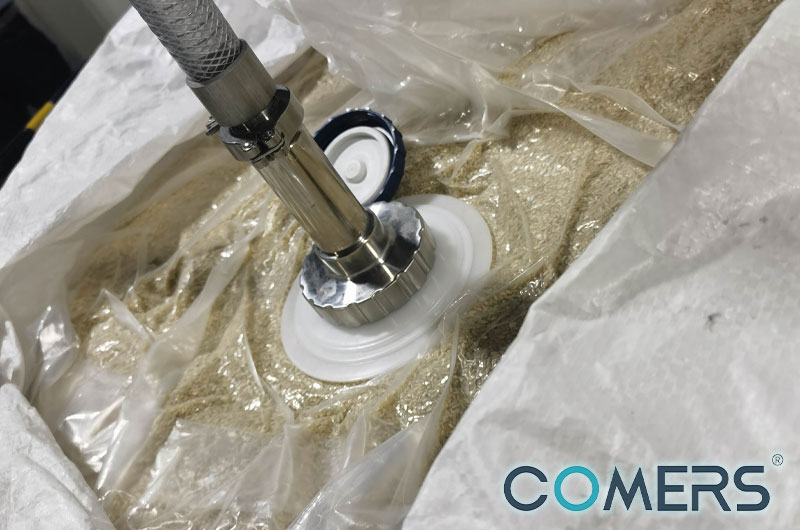
Intertram®FIBC Liners
+ Permanent anti-static / temporary anti-static
+ High barrier performance
+ Single material
+ Prevent from moisture, oxygen(low WVTR<3.0,OTR<1.0)
+ Various film types and thicknesses (Length:1M1-2M2 Thinkness:30-160um)
+ For milk powder/ coffee powder
+ Effective barrier and product protection
+ Strict quality control and safety standards
+ Highly customizable solutions
+ Durable and puncture-resistant
-
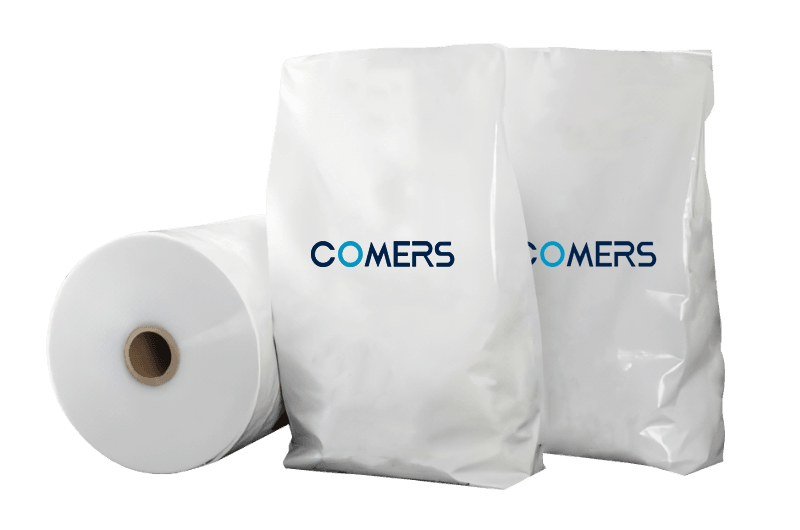
Intertram®FFS Liners
+ high barrier performance
+ prevent from moisture, oxygen(low WVTR<3.0,OTR<1.0)
+ various film types and thicknesses (Length:1M1-2M2 Thinkness:30-160um)
+ can replace Al material
+ High standard in food safety
+ Anti-static film (ATEX prevention)
+ Strict control over contaminants (BPA, Sakazaki-bacillus, etc.)
+ Tailored to customer needs
+ Enhanced product shelf life (approx. 6 months)
-

Washna ® Easy-peel films
+ prevent from moisture, oxygen(low WVTR<3.0,OTR<1.0)
+ various film types and thicknesses (Thickness:45 - 90um)
+ Clean & Safe Delamination
+ smooth sealing layer without wire drawing
+ Optimal Peel Performance
+ Good control level of black dot crystal point, in line with GB/T28117
+ Food contact safety
+ High durability
+ Superior barrier properties
+ Child-friendly opening
+ Clean, residue-free peel -
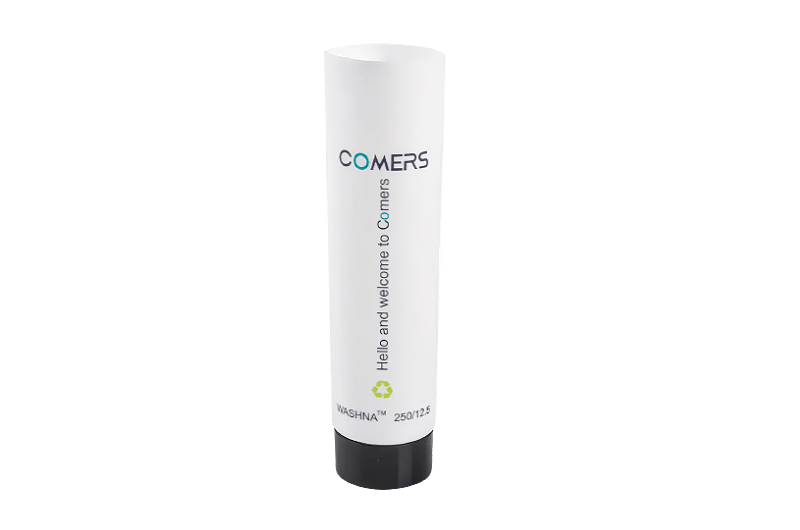
Washna® toothpaste films
+ Suitable for products in paste form
+ High stiffness and good mechanical properties
+ APR approval, Blow-molded in a single blow-molding
+ EVOH≤5%, in line with CEFLEX
+ white/transparent/ultra-white variants (customizable whiteness)
+ Precise thickness control (175−350μm±3%)
+ Excellent puncture resistance
+ Speckle-free surfaces (GB/T 28117 compliant)
+ Reduces environmental impact -
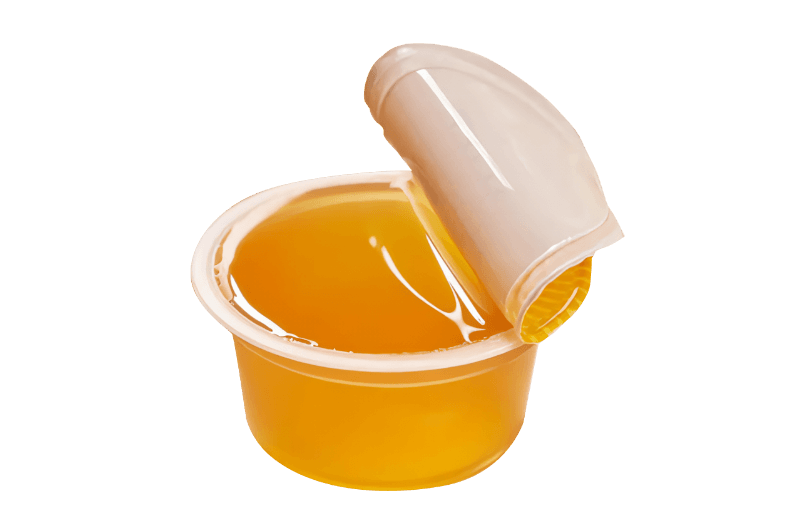
Washna® Laminate films
+ Operates with high-volume film
+ ultimate cost control
+ Good level of crystal point and black point control
+ Customizable with thickness and EVOH ratio
+ Easy-open End (EOE) functionality
+ Preserves freshness and extends shelf life
+ Odor-neutral composition
-
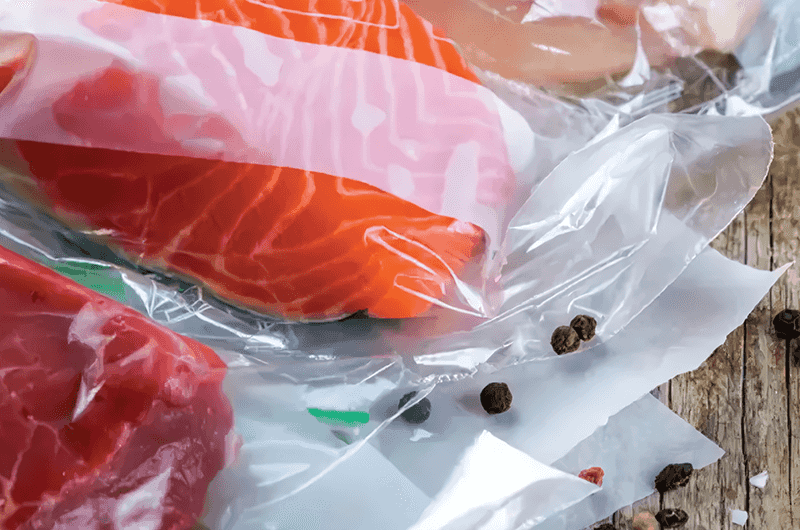
Agometa ® Frozen Vacuum Packaging Bags/Films
+ Excellent transparency
+ Good barrier against water vapor and oxygen
+ Heat sealing performance
+ Adds ultra-high barrier properties
+ high-end food market
+ stable performance, flexible and versatile
+ Good puncture resistance
Jiangsu Comers Neo Materials Co., Ltd.
No.161 Cailing Road, Linhu Town, Wuzhong District, Suzhou City, Jiangsu Province, China.
+86-0512-66558319
E-mail: [email protected]
