

 English
 中文简体
中文简体Why Bulk Powder Packs Leak Oxygen: Root Causes and Fixes
Content
- 1 Direct answer: why bulk powder packs leak oxygen and the fastest fix
- 2 Leak vs. permeation: two different ways oxygen gets inside
- 3 Root causes during packing: where bulk powder packs usually fail
- 4 Root causes after packing: handling, storage, and transport effects
- 5 How to identify the true cause: tests that separate leaks from permeability
- 6 Fixes that work: seal integrity and contamination control
- 7 Fixes that work: barrier materials, purge strategy, and oxygen scavenging
- 8 Quality controls that prevent repeat failures
- 9 Practical acceptance criteria: what “good” looks like
- 10 Quick checklist: root causes and fixes you can apply immediately
Direct answer: why bulk powder packs leak oxygen and the fastest fix
Most “oxygen leak” issues in bulk powder packs are caused by microleaks at heat seals, folds, or fitments—not by the film’s oxygen permeability. The quickest path to a stable low-O2 pack is to (1) prove whether you have microleaks or permeation, (2) tighten seal conditions and contamination control, and (3) add routine leak testing as a release gate.
If you nitrogen-flush and still see oxygen climb quickly, assume a leak until proven otherwise. A simple pattern check often saves weeks of trial-and-error:
- Oxygen rises fast (hours to a few days) → typically microleaks at seals/closures.
- Oxygen rises slowly and predictably (weeks) → permeation may dominate.
- Oxygen rises after shipping/handling → punctures, abrasion, or seal fatigue.
Leak vs. permeation: two different ways oxygen gets inside
What “leaking oxygen” usually means in practice
In packaging terms, oxygen enters a pack by:
- Microleaks (a pathway through a seal, fold, pinhole, or fitment interface).
- Permeation (oxygen diffusing through the film structure over time).
A quick reality check with headspace math
Suppose a bulk powder pack has a 5 L headspace after filling and flushing. If headspace oxygen increases from 1% to 5% in 7 days, the added oxygen is:
- 5 L × (0.05 − 0.01) = 0.20 L = 200 mL O2 added in 7 days
- That’s ~29 mL/day, which is far more consistent with a leak pathway than with a properly specified high-barrier laminate.
This is why the troubleshooting order matters: find/stop microleaks first, then confirm whether film barrier is still limiting shelf life.
Root causes during packing: where bulk powder packs usually fail
Powder contamination in the seal area
Fine powders can “dust” the seal land and prevent full fusion. This is especially common with low-bulk-density powders, hygroscopic materials, or dusty fill systems. The result is a seal that looks closed but contains microchannels.
- Symptoms: intermittent failures, higher leak rate at the top seal, improvement after cleaning jaws.
- High-risk moments: just after product changeover, dusty batches, or high fill speed.
Sealing window not centered (temperature, pressure, dwell)
Heat seals are a three-variable process. If any variable drifts, you can get weak seals, voids, or “peel-open” corners. Bulk packs are more sensitive because loads and handling stress amplify small defects.
- Under-seal: incomplete fusion, leak paths, low burst strength.
- Over-seal: film thinning, brittleness, “edge burn,” stress cracking over time.
Gussets, folds, and wrinkles (geometry defects)
Wrinkles create “bridges” where seal faces don’t fully contact. Gusset transitions and fold lines are classic microleak locations, especially on large-format bags where alignment is harder.
Fitments and reclose features
Zippers, spouts, or liners add interfaces that can leak. Even if the top seal is perfect, oxygen can enter at the fitment weld, cap threads, or zipper track—particularly if powder fouls the closure.
Root causes after packing: handling, storage, and transport effects
Drop, vibration, and abrasion creating pinholes
Bulk packs get dragged, stacked, and palletized. Corners and contact points can abrade, creating pinholes that behave like leaks. A pack that passes leak test right off the line can fail after shipping if the film is not abrasion-resistant or if secondary packaging is insufficient.
Seal fatigue from internal load and headspace pressure swings
Heavy product loads stress seals. Temperature changes can expand or contract headspace gas, repeatedly loading the seal line. If the seal is marginal, these cycles can open microchannels over days.
Humidity and caking that disrupts closures
Some powders cake into the zipper track or cap interface, holding closures slightly open. This is often misdiagnosed as “film permeability” when the real issue is closure fouling.
How to identify the true cause: tests that separate leaks from permeability
The goal is to answer one question: Is oxygen entering through a defect pathway (leak) or through the material (permeation)? Use at least one “leak test” plus one “headspace O2 trend” method.
| Observation | Most likely cause | Best confirming test | Fix direction |
|---|---|---|---|
| O2 jumps within 24–72 hours | Microleak (seal/fold/fitment) | Vacuum decay or bubble leak | Seal optimization + contamination control |
| O2 rises slowly and consistently | Permeation-limited shelf life | OTR data review + long-term headspace logging | Upgrade barrier laminate or add scavenger |
| Only some bags fail, random pattern | Process variation or powder-in-seal events | Seal peel mapping + jaw inspection | Center sealing window, improve cleaning/controls |
| Passes at line, fails after shipping | Abrasion/puncture or seal fatigue | Post-ship leak test + visual pinhole inspection | Film toughness + corner protection + secondary pack |
| Failures concentrated at corners/gussets | Wrinkles, folds, poor registration | Dye penetration and seal cross-section | Alignment, jaw profile, seal width increase |
| O2 rises mainly in reclose packs | Closure fouling or fitment interface leak | Localized leak test around closure | Anti-fouling design + closure cleaning controls |
Minimum test set for credible troubleshooting
- A leak test that can detect microleaks (vacuum decay, pressure decay, or bubble immersion).
- Headspace O2 measurement at Day 0 and trending over time (same storage conditions).
- Seal integrity check (peel strength distribution across the seal, not just an average).
Fixes that work: seal integrity and contamination control
Lock down the sealing window (and document it)
Treat heat sealing like a controlled process, not a “set-and-forget” knob. Establish a validated operating window for temperature, dwell, and pressure, then add alarms or checks for drift. For bulk packs, increasing seal width often provides a real-world robustness gain.
Prevent powder from reaching the seal land
The most common mechanical fix is improving the “clean zone” at the top of the bag before sealing. Options depend on equipment, but the objective is consistent: keep the sealing surfaces clean.
- Add de-dusting or vacuum extraction near the bag mouth before sealing.
- Use a “settle time” or vibration step so product drops away from the seal area.
- Improve fill spout alignment to reduce blow-back dusting.
- Implement jaw cleaning frequency based on measured contamination, not guesswork.
Make seals more tolerant to real-world variation
If your process is near the edge, small variations cause leaks. Design for tolerance:
- Increase seal width where geometry allows.
- Improve registration and tension control to minimize wrinkles at seal initiation points.
- Use jaw faces and coatings suited to the laminate to avoid slip or uneven heat transfer.
Fixes that work: barrier materials, purge strategy, and oxygen scavenging
Choose barrier based on a quantified oxygen budget
Film selection should be driven by an oxygen ingress budget (how much oxygen your powder can tolerate before quality drops). High-barrier laminates (often using EVOH, metallized layers, or foil structures) can reduce permeation by orders of magnitude compared to standard polyolefin films, but they can’t compensate for microleaks.
Nitrogen flushing: what it can and cannot fix
Nitrogen flush reduces initial oxygen but does not stop oxygen ingress. If your seals leak, flushing can actually mask the problem until O2 rebounds. Use flushing as part of a system: stable seals + verified barrier + validated headspace targets.
When to use oxygen scavengers
Oxygen scavengers are most effective when you have controlled microleaks and need to offset residual permeation. They are not a substitute for seal integrity; a significant leak can consume scavenger capacity rapidly.
- Good fit: slow, predictable O2 rise that matches permeation behavior.
- Bad fit: rapid O2 rebound after flush (indicates a leak pathway).
Quality controls that prevent repeat failures
Add leak testing as a release gate
For oxygen-sensitive powders, treat leak testing like a critical control point. Even sampling a small number of packs per lot can catch drift early, but the test must be sensitive enough to find microleaks that matter.
Headspace O2 trending (simple, persuasive, actionable)
Track headspace O2 at Day 0, Day 1–3, and Day 7 under controlled conditions. The early slope is often diagnostic: a steep early slope strongly suggests microleaks.
Shipping simulation for bulk formats
If failures occur after distribution, simulate drop, vibration, compression, and abrasion with packaged product. Re-test for leaks post-simulation to confirm whether handling drives oxygen ingress.
Practical acceptance criteria: what “good” looks like
Criteria depend on powder sensitivity and shelf-life expectations, but you can set a clear framework:
- Define a maximum allowable headspace O2 at pack-out (after flush, if used).
- Define an allowable O2 increase over a fixed time window (e.g., Day 0 to Day 7) at specified storage conditions.
- Set a leak-test threshold and sampling plan that detects the defect sizes that correlate with oxygen rebound.
If you must pick one simple rule for operations: any pack that shows rapid O2 rebound after flushing should trigger a seal-area investigation before you change materials.
Quick checklist: root causes and fixes you can apply immediately
If you suspect microleaks
- Inspect and clean sealing jaws; confirm uniform heat and pressure across the seal.
- Reduce powder-in-seal events (de-dust, settle, improve fill alignment).
- Check gusset/fold alignment and wrinkle control at the seal initiation points.
- Leak-test immediately and again after a short handling simulation.
If permeation is the limiting factor
- Confirm long-term headspace O2 trends under controlled storage.
- Upgrade the laminate barrier based on a defined oxygen budget (don’t guess).
- Consider oxygen scavenging only after seals are proven robust.
Bottom line: bulk powder packs “leak oxygen” primarily because sealing and interfaces fail under real production and handling conditions. Prove the mechanism with the right tests, fix seals and contamination first, then optimize barrier and purge strategy to hit shelf-life targets.
-
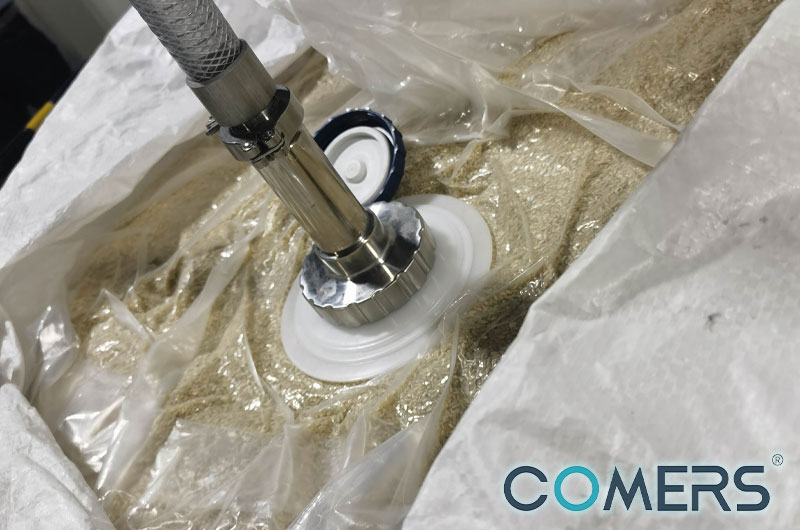
Intertram®FIBC Liners
+ Permanent anti-static / temporary anti-static
+ High barrier performance
+ Single material
+ Prevent from moisture, oxygen(low WVTR<3.0,OTR<1.0)
+ Various film types and thicknesses (Length:1M1-2M2 Thinkness:30-160um)
+ For milk powder/ coffee powder
+ Effective barrier and product protection
+ Strict quality control and safety standards
+ Highly customizable solutions
+ Durable and puncture-resistant
-
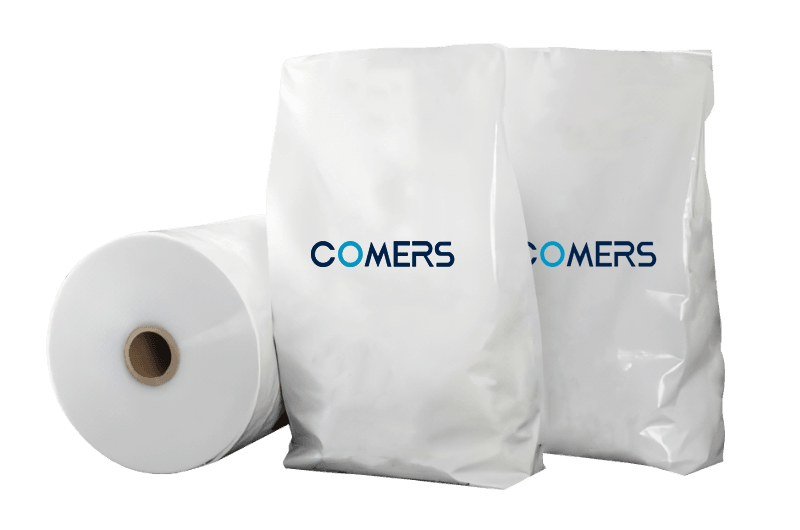
Intertram®FFS Liners
+ high barrier performance
+ prevent from moisture, oxygen(low WVTR<3.0,OTR<1.0)
+ various film types and thicknesses (Length:1M1-2M2 Thinkness:30-160um)
+ can replace Al material
+ High standard in food safety
+ Anti-static film (ATEX prevention)
+ Strict control over contaminants (BPA, Sakazaki-bacillus, etc.)
+ Tailored to customer needs
+ Enhanced product shelf life (approx. 6 months)
-

Washna ® Easy-peel films
+ prevent from moisture, oxygen(low WVTR<3.0,OTR<1.0)
+ various film types and thicknesses (Thickness:45 - 90um)
+ Clean & Safe Delamination
+ smooth sealing layer without wire drawing
+ Optimal Peel Performance
+ Good control level of black dot crystal point, in line with GB/T28117
+ Food contact safety
+ High durability
+ Superior barrier properties
+ Child-friendly opening
+ Clean, residue-free peel -
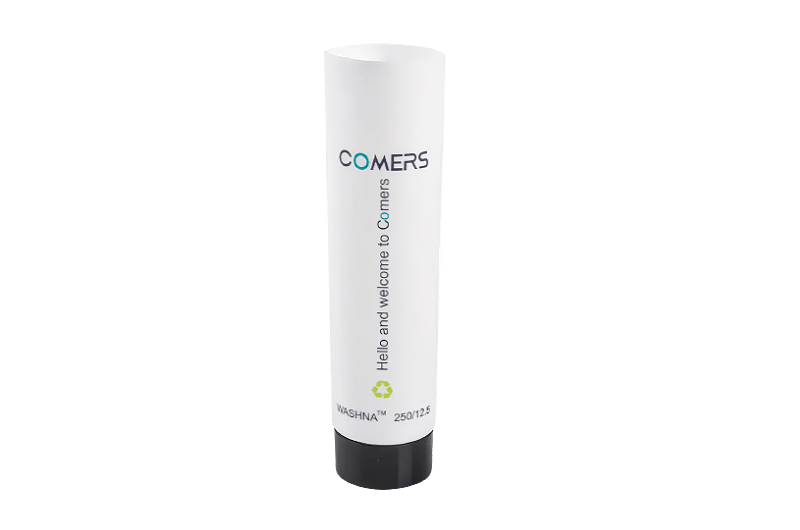
Washna® toothpaste films
+ Suitable for products in paste form
+ High stiffness and good mechanical properties
+ APR approval, Blow-molded in a single blow-molding
+ EVOH≤5%, in line with CEFLEX
+ white/transparent/ultra-white variants (customizable whiteness)
+ Precise thickness control (175−350μm±3%)
+ Excellent puncture resistance
+ Speckle-free surfaces (GB/T 28117 compliant)
+ Reduces environmental impact -
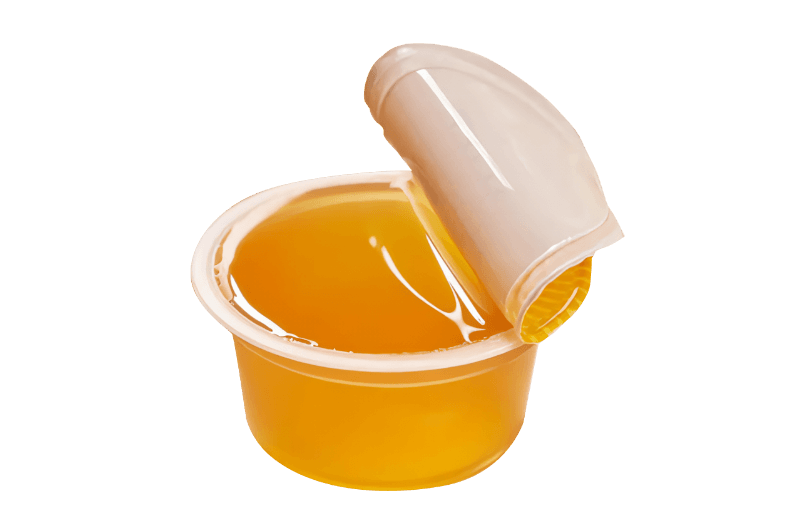
Washna® Laminate films
+ Operates with high-volume film
+ ultimate cost control
+ Good level of crystal point and black point control
+ Customizable with thickness and EVOH ratio
+ Easy-open End (EOE) functionality
+ Preserves freshness and extends shelf life
+ Odor-neutral composition
-
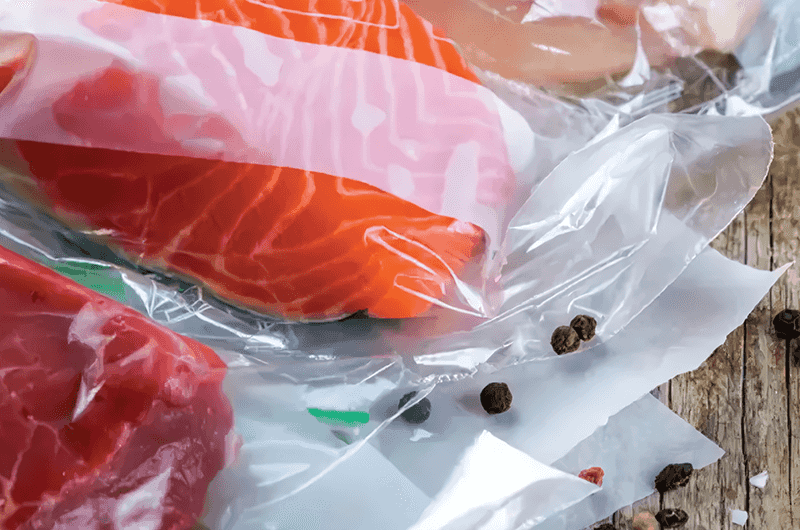
Agometa ® Frozen Vacuum Packaging Bags/Films
+ Excellent transparency
+ Good barrier against water vapor and oxygen
+ Heat sealing performance
+ Adds ultra-high barrier properties
+ high-end food market
+ stable performance, flexible and versatile
+ Good puncture resistance
Jiangsu Comers Neo Materials Co., Ltd.
No.161 Cailing Road, Linhu Town, Wuzhong District, Suzhou City, Jiangsu Province, China.
+86-0512-66558319
E-mail: [email protected]
